From Ireland to Spring Green Part Two


|
|
From Ireland to Spring Green Smith Family History August 2, 2001 Part 2
Submitted by Dr. Bernie F. (Biff) King March 2007 |
Chapter 4
Smith Family History
The potato famine struck Ireland in the last 1840’s. This devastated the rural Irish who depended heavily on the tuber. The potato was the only things some Irish owned. Their land was taken from them many years ago. Their freedom to learn and get an education was restricted. Because of this the Irish people were poor and struggling.
However, the Irish were still a people of hope! Their faith and their religion were the key! The priests, the churches, their communities were all grounded in love, faith and church. Because of this many Irish were schooled despite being so poor. They could read and learn of a better life elsewhere. Despite this optimism, the Irish, especially the rural Irish, were devastated by the potato fungus.
Somewhere in the region of County Monaghan in the early 1800’s a young baby Girl was born. Her name was Mary or Margaret (Editors Note: US Census records, Irish John’s death certificate and Bear Creek cemetery record show Irish John’s mother was named ‘Catharine’. It is possible Catharine’s first name could have been either Mary or Margaret. We have seen this with other relatives who preferred to use their middle name in life.). All we know about her is that she had a son whose name was John. Her husband’s last name was Smith. There is a Margaret Smith who was from Ireland and was buried in the Bear Creek Catholic Church in So. Wisc. She was born in 1832. (Editor’s Note: This Margaret Smith may have been married to Patrick Smith, also of Bear Creek Township.) Together they sailed to America and landed in New York. Her husband must have died en route or in New York. Many young Irish men died during work or due to disease or due to drinking.
Irish John’s mother re-married in Brooklyn, N.Y., and later moved with her son, John, to Bear Creek, WS, near current day Spring Green. This move must have occurred in the 1850’s and the young family owned a small farm in the Bear Creek area in Franklin (#10) Township, Section 21. There was a Patrick Smith who farmed nearby, who could have been a brother or uncle. What is known is that the Irish settled in the Bear Creek area and often came from the same country in Ireland. Many were related and often sent money back to more relatives so that they could come to America and join them in their settlement area. We know that John was a young boy at the time of the 1850’s because when he enlisted in the Civil War in 1862 he lied about his age and was 15 or 16 years old. That would place his birth in 1846 or 1847 – in the middle of the devastating Potato Famine. His official birthday is listed as 1841 – but that would have made him 21 at the time of enlistment into the war which is legal age! So he was likely born later.
|
|
|
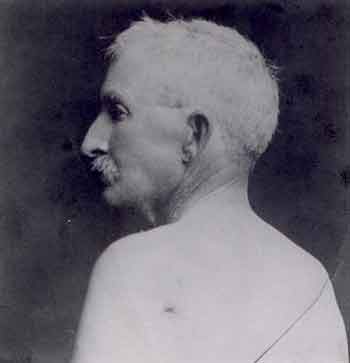
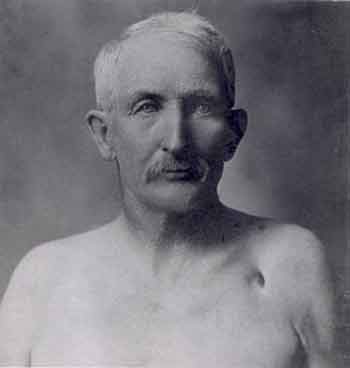
All we know about “Irish John Smith” is that he enlisted into the Civil War in 1862 in Cross Plains, WS, which is 15 miles east of Spring Green, WS. It is likely that he “conscripted” into service, meaning that he was paid by another man (usually wealthy) to enter into service for him. The conscription usually paid a fee ($50 – 250) to the young soldier which was a lot of money at the time. Uncle Jim Smith (Kimball) states that his grandpa (Irish John) always told him that he lied about his age when he enlisted and that he was only 15 years old (born in 1847).
John entered the Wisconsin 29th Infantry, Company G. He was in the battle(s) of Vicksburg (around present day Memphis). On May 16, 1863, he was shot through the left shoulder by a musket rifle in the battle at Champion’s Hill. According to family stories, he laid there thinking he would die shortly, as many did. However, after 1 – 2 days, he realized he wasn’t dying and said “darned if I am going to die on Confederate soil!” So he got up and walked back to camp and survived! After recovering (back home?) he served in the V.R.C. (Veterans Reserve Corps) with other wounded soldiers who were no longer able to fight. By 1865 he was home in Bear Creek and the Civil War had ended.
CLICK TO ENLARGE
|
Rallying the troops in Madison August 1862 |
Rallying troops 1862, p 2 |
Rally
|
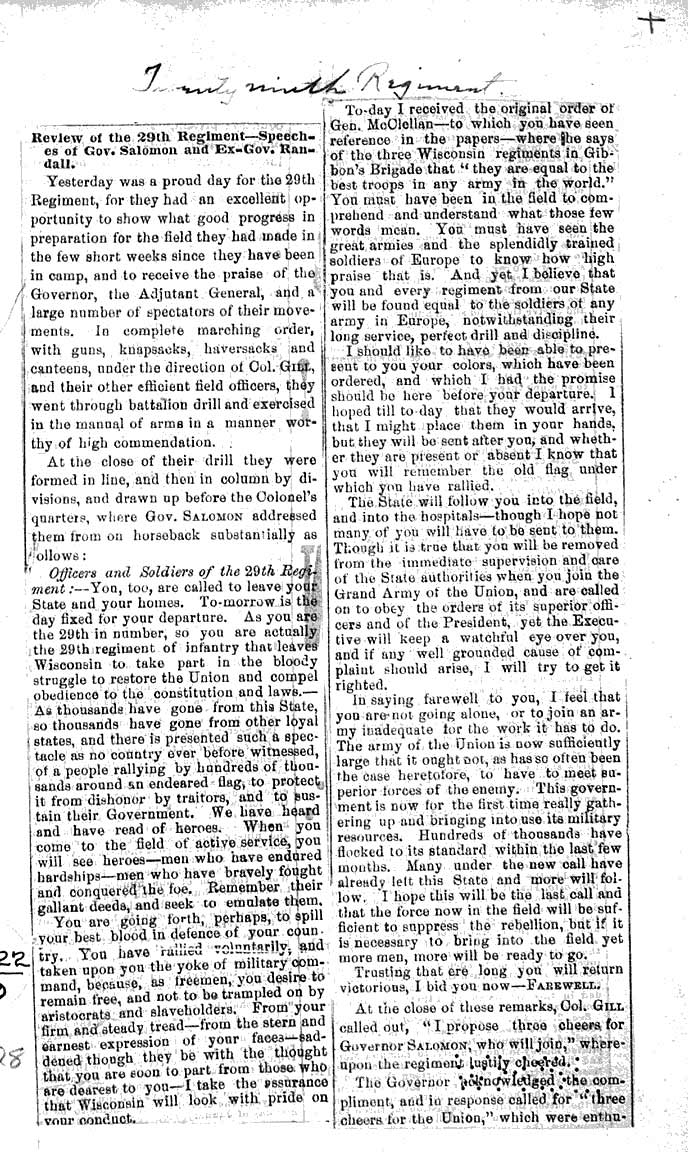
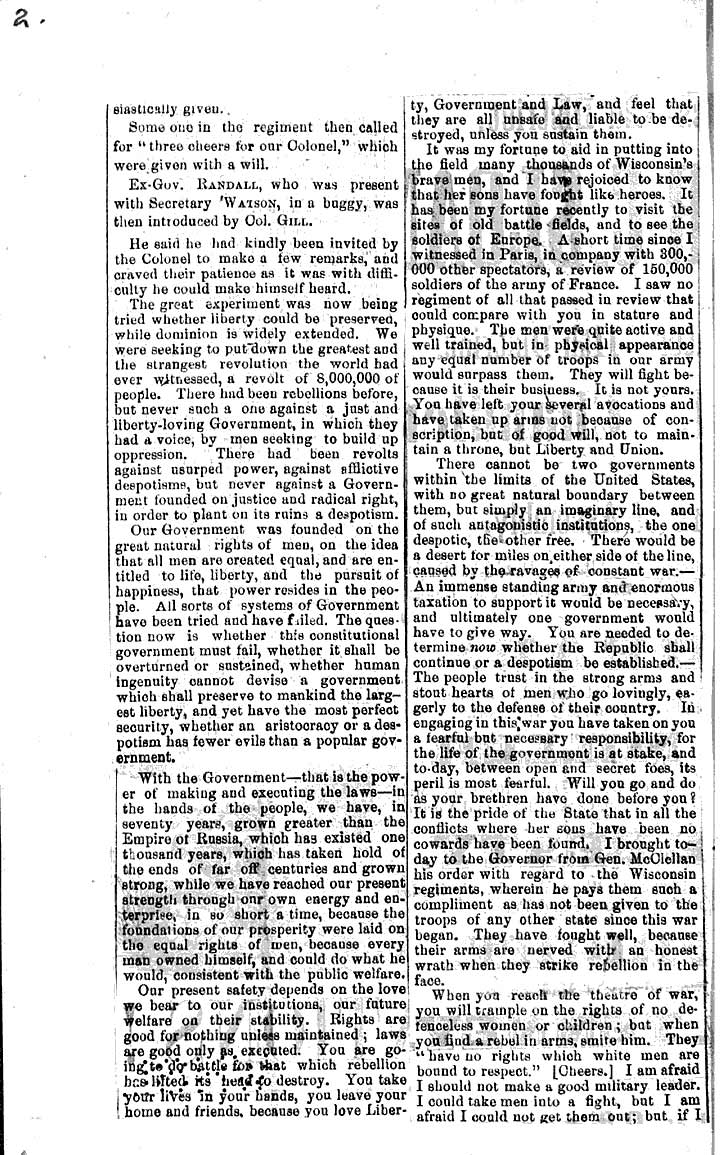
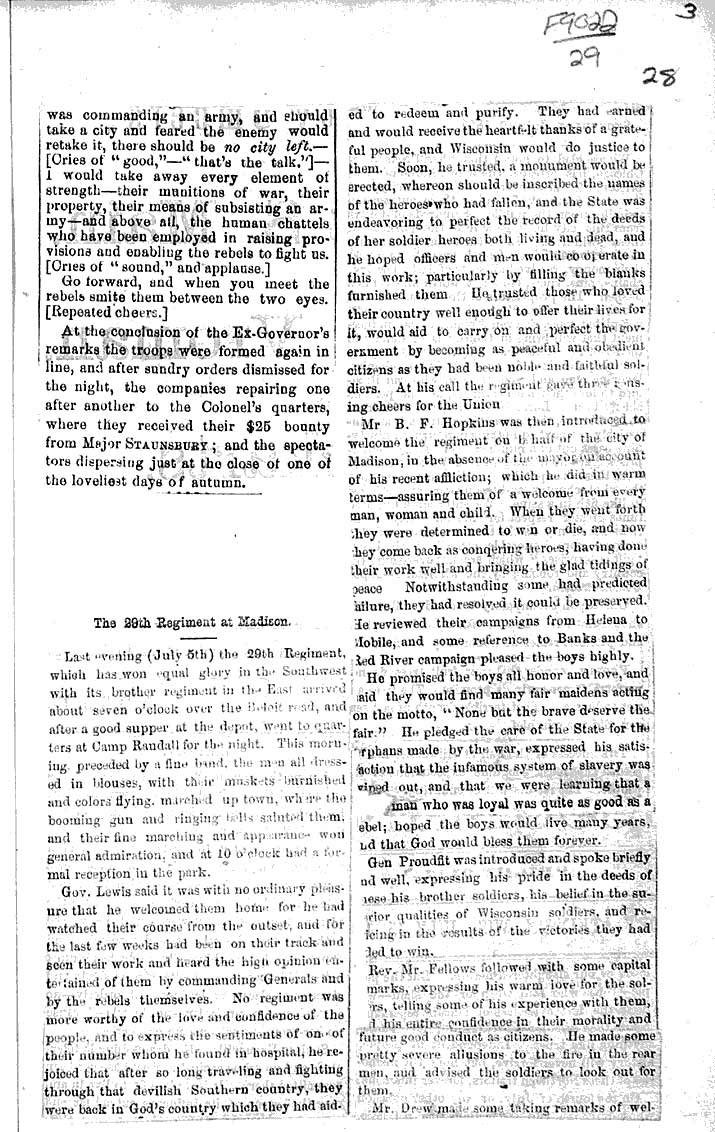
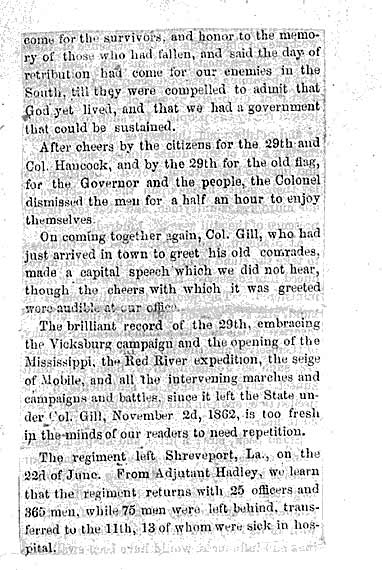
What it must have been like... We may never know what conversations or topics of discussions our ancestors had, but through the items we read in old newspapers, it gives us some clues. One article was written just before the 29th regiment was preparing to go into enemy territory. The editorialists described the excitement in the air, the comments elicited by the recruits, and the rousing speeches...you can "feel" the excitement of the soldiers as they were preparing to board the trains. +++ One thing that we always knew was that soldiers were offered bounties if they enlisted in the service. We don't know how much was offered in total, but in this case, the newspapers tell us that all the soldiers received $25 when the ceremony ended.
|
|
Rallying the troops, p 3 & Return of the 29th in July 1865, p 1 |
Return of the 29th in July 1865, p 2 |
In 1868 a young family from Ireland immigrated to Bear Creek, WS. The father’s name was Michael McPhillips. He was born in County Fermanagh which right next to County Monaghan. Michael was born in 1822. By the time the famine struck Ireland in 1847, Michael was 25 years old. He and his wife married in Ireland and had 3 sons (Patrick – Spring Green, John – St Paul, MN, and Owen – Kimball) and two daughters, Susan (Kimball) and a young girl who died early (Mary).
Susan McPhillips was born in 1857 in Ireland. She was the youngest. By the time her family had immigrated to Wisconsin she was 11 years old. They settled on a small farm in Bear Creek area and later moved their farm just north of Spring Green, WS.
Susan’s mother’s maiden name was Mary Smith (or Smyth). Mary Smith married Michael McPhillips and together they came to America. Mary died in 1886 and was in her 60’s. Michael turned the farm over to his son Patrick and went to South Dakota with his daughter and son-in-law, “Irish John Smith”.
Before Susan married young John Smith, she apparently dated a young Owen King whose father owned and operated the local lumber business. Uncle Frank Smith (Kimball) would often reminisce that his mother Susan (McPhillips) Smith used to say “Oh yes, I dated Ownie King” before marrying your father, John Smith.
Susan McPhillips and John Smith fell in love and married in St. Mary’s Church, Sauk County, WS (?Bear Creek area) on April 14, 1874. Susan was 17 years old and John was about 27 years old. Family legend holds that when John returned to Bear Creek after the war he was given a free quarter of land because he was injured in the war. Their farm was in Franklin Township, Section 21 in 1877. It was there that their first (5) children were born (Peter, Michael (Mick), William, Mary and Catherine (Kitty).
|
Irish John spent 7-8 years on Walworth St., Brooklyn, NY; makes his way to Wisconsin before 1860 and by 1885 is homesteading in South Dakota More information on Smiths of Dakota, click on Smith Family |
|||||||||||||
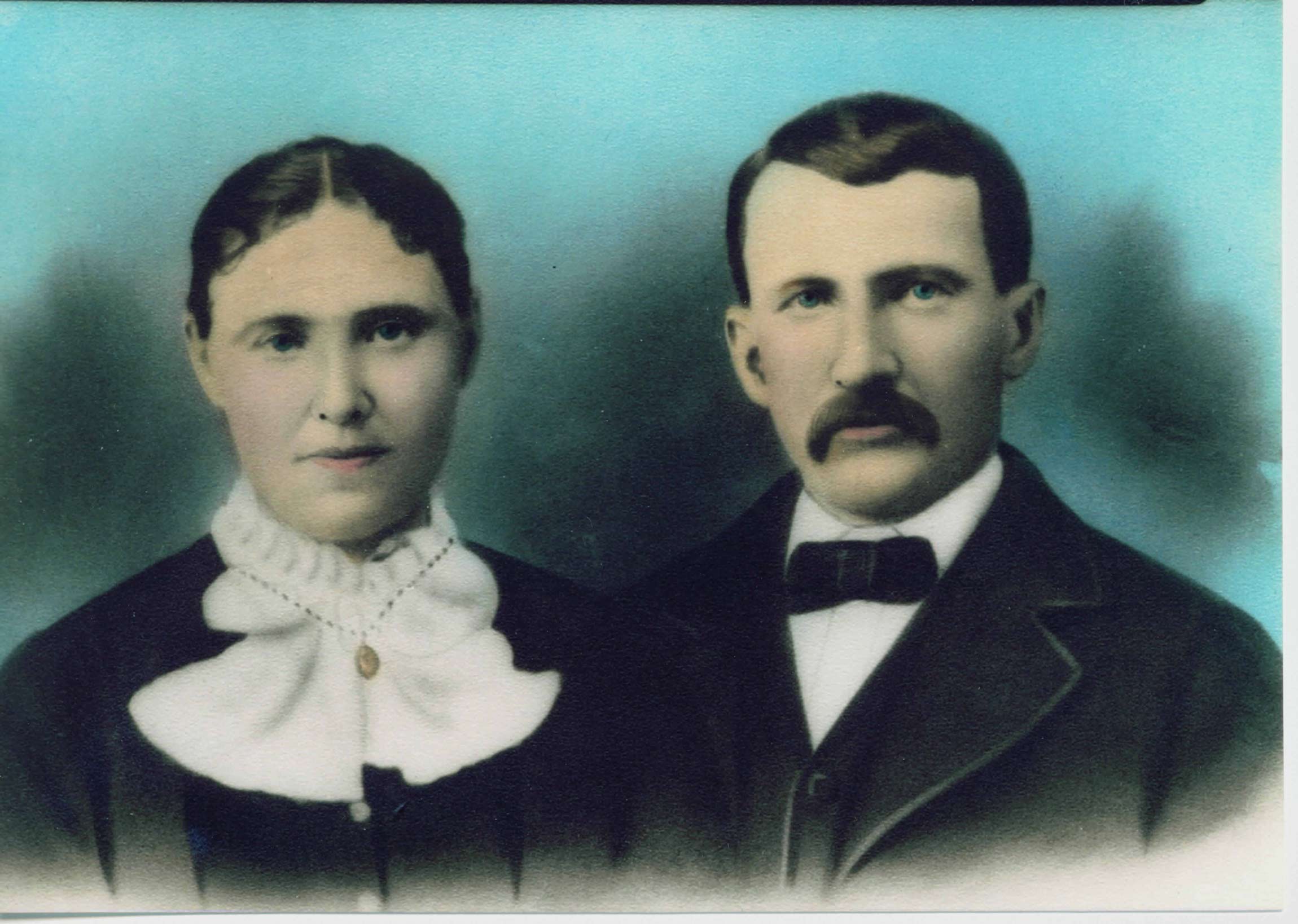
In 1883 – 1885 Irish John, his wife Susan, and their 5 children headed west to homestead in South Dakota. Now, you might ask, “Why would they want to move to South Dakota?” Well, no one knows for sure, but several factors certainly played a role.
First of all South Dakota was part of the Frontier in 1880’s. The Sioux Indians had just been defeated (and devastated) after the slaughter at “Custer’s Last Stand”. Gold was brining more and more settlers to the Black Hills and the railroad was moving west.
A Scottish businessman by the name of “Mitchell” was in charge of bringing the railroad into South Dakota. His home town was “Aberdeen, Scotland” and it is clear that he left his mark on South Dakota (Aberdeen and Mitchell, South Dakota).
But the two biggest factors that probably led to John and Susan Smith to South Dakota were two Acts of Congress. The first was the “Homestead Act of 1862” which gave each new settler on quarter of land (160 acres) on the frontier. Then in 1873, the Timber Culture Act of 1873 gave any settler another quarter of land if they would plant, protect, and keep in good condition a “shelter belt” and they would maintain it for 8 years. Finally, newspaper articles kept referring to South Dakota as the “Land of Plenty”, “clothed with verdure”, that “outrivaled its neighbor states in the east in the products of its soil, sown, cultivated and harvested in less time and with greater ease than in any other portion of the United States!” How could John and Susan resist!
They left for South Dakota in the early 1880’s. They built a home there and acquired more land. They had 8 more children giving them a total of 13 children. Only 10 lived to adulthood. The first child born in South Dakota was Maggie and then John who died in surgery at an early adult age. Next was Genevieve who eventually married Harry Byrne who attended Beloit College just south of Spring Green, WS. Genevieve and Harry had 3 children: Dr. John Byrne, Margie and Pudge (Mary). The next child of John and Susan’s was Elizabeth who married Harold Willrodt of Chamberlin. He invented a “hay loader” and eventually went into the implement and auto business. The Willrodt’s had (4) kids: Betty and Susan in Omaha, Bill (auto dealer in Chamberlin), and Mary (Hixon) in Bismarck.
The youngest of John and Susan was Frank, whose given name was Owen! Frank married Eleanor Luedke and together they farmed near John and Susan. John was about 54 when Frank was born in 1901. Susan was 44!
The older Smith children were each given a farm. The oldest, Peter, gambled it away. The second oldest, Mick, farmed it with his wife “Kit” Catherine (Kennedy – Fitzgerald) Smith and their 3 children (James, Mary Margaret and Susan).
The third oldest, William, became a banker in Stickney, SD. William and his wife had 3 children: Mildred (Fox), John of Eureka (lawyer) and Mary. John Smith of Eureka and his children are the only Smith family members who continue to bear the family name. Steve Smith is a lawyer in Chamberlin and is the nearest Great Grandchild to the family homestead.
Finally, the last 2 of the older group of John and Susan’s children who were born in Spring Green were Mary (Clinton, Iowa) and Kitty (Catherine). Kitty and Frank and Eleanor cared for their parents as they aged.
Susan (McPhillips) father, Michael came to live with Susan and John when he suffered a stroke in 1907. He died 5 years later
|
||||||||||||
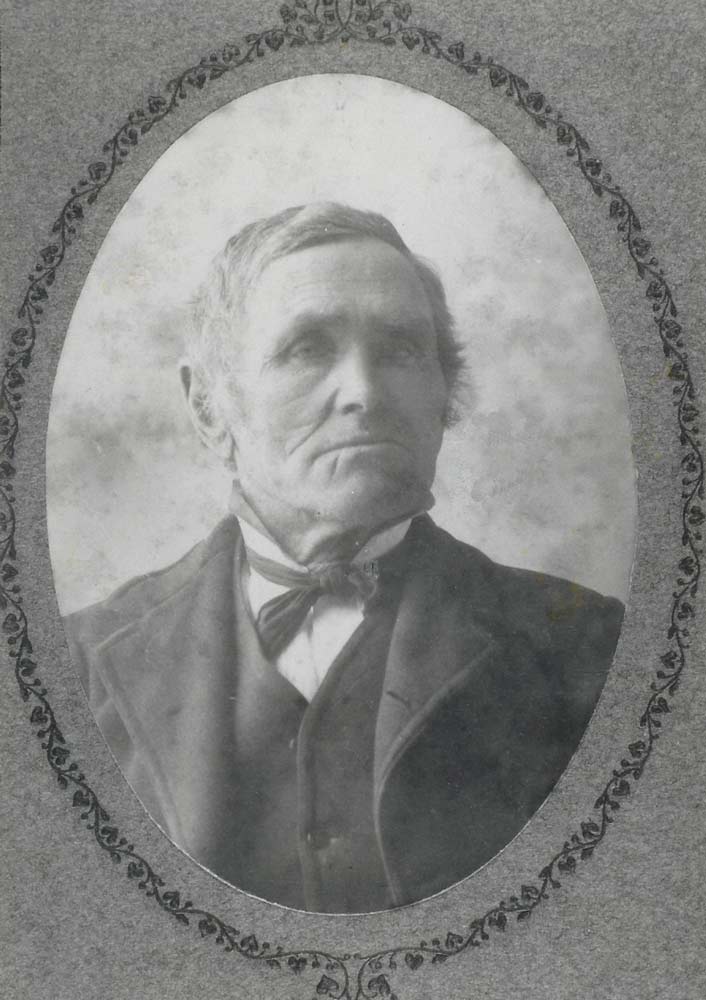
Irish John would go back to Spring Green occasionally where he still owned land at least until 1922. Apparently he wired his wife Susan while he was in Spring Green that he was going back to Ireland to visit (without her!) After he returned to Kimball (from Ireland) he found that Susan had added onto the kitchen and had some significant remodeling on her own. She is said to have said “If he is going back to Ireland – I am going to add-on to the kitchen!”
John Smith went into politics and became a State Senator. He died on 8-31-1928 at the age of about 81. His wife Susan lived in the home of Michael and Kit with Frank and Eleanor and passed away on 3-21-1939.
Young Michael was farming and he met a young woman, Catherine Kennedy, who had just moved to Kimball to teach school. Catherine Kennedy was born to Margaret (Hill) Kennedy and James Kennedy in Dubuque, Iowa. James was a pharmacist, but died at an early age from an asthma attack and alcohol. Margaret sent Catherine to live with the nuns who helped raise her and educate her. She became a certified teacher and moved to Kimball, S.D. where her cousins, the Ryans, lived. Her mother, Margaret (Hill) remarried Jack Fitzgerald who was a hotel operator in Waukon, Iowa. Our family lore suggests Margaret Hill’s father was from Scotland and James Kennedy’s was born in Wexford, Ireland. (Editor’s Note: In other related families, their lore suggests possible ‘English’ blood. Margaret Hill’s father was Edward Hill. His death certificate shows he was born in Ireland as was his parents. When asked this question, Eliza Hill Ryan would only say she was a Yankee.)
Kit (Catherine) moved to Kimball where Margaret (Hill) Fitzgerald’s sister, Liza Ryan, was teaching. Liza’s daughter, Ethel, was Kit’s cousin.
CLICK TO ENLARGE
|
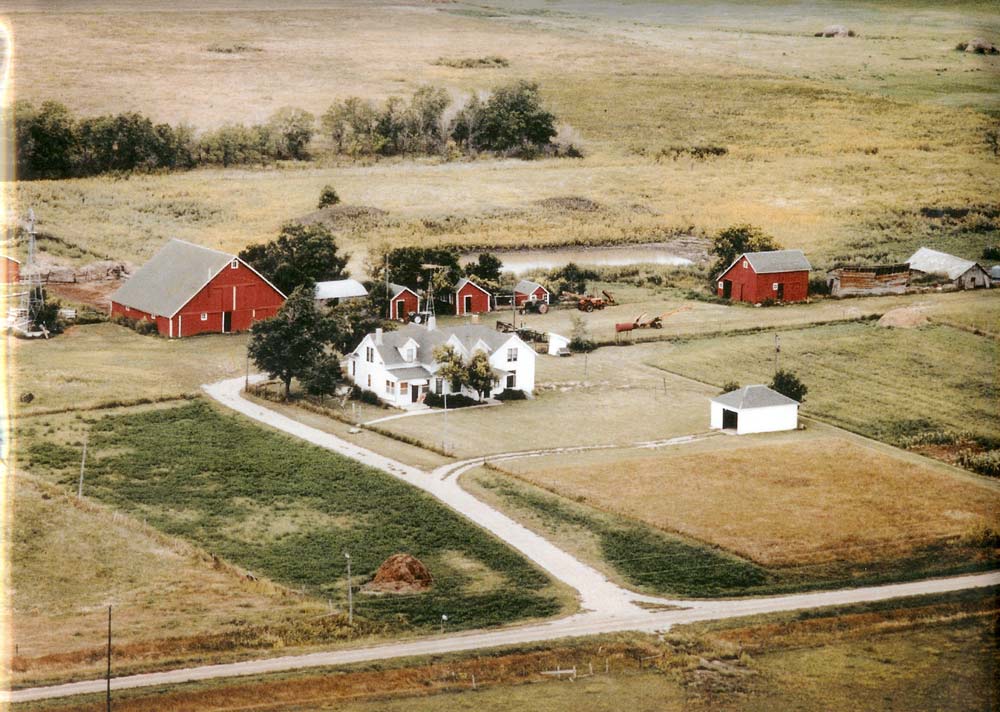
1894 Smith Homestead/Farm in Wisconsin |
...
1877 Smith Homestead in Wisconsin |
..
Smith Farm, Spring Green, Current |
|
Smith Farm 1906, Spring Green |
|
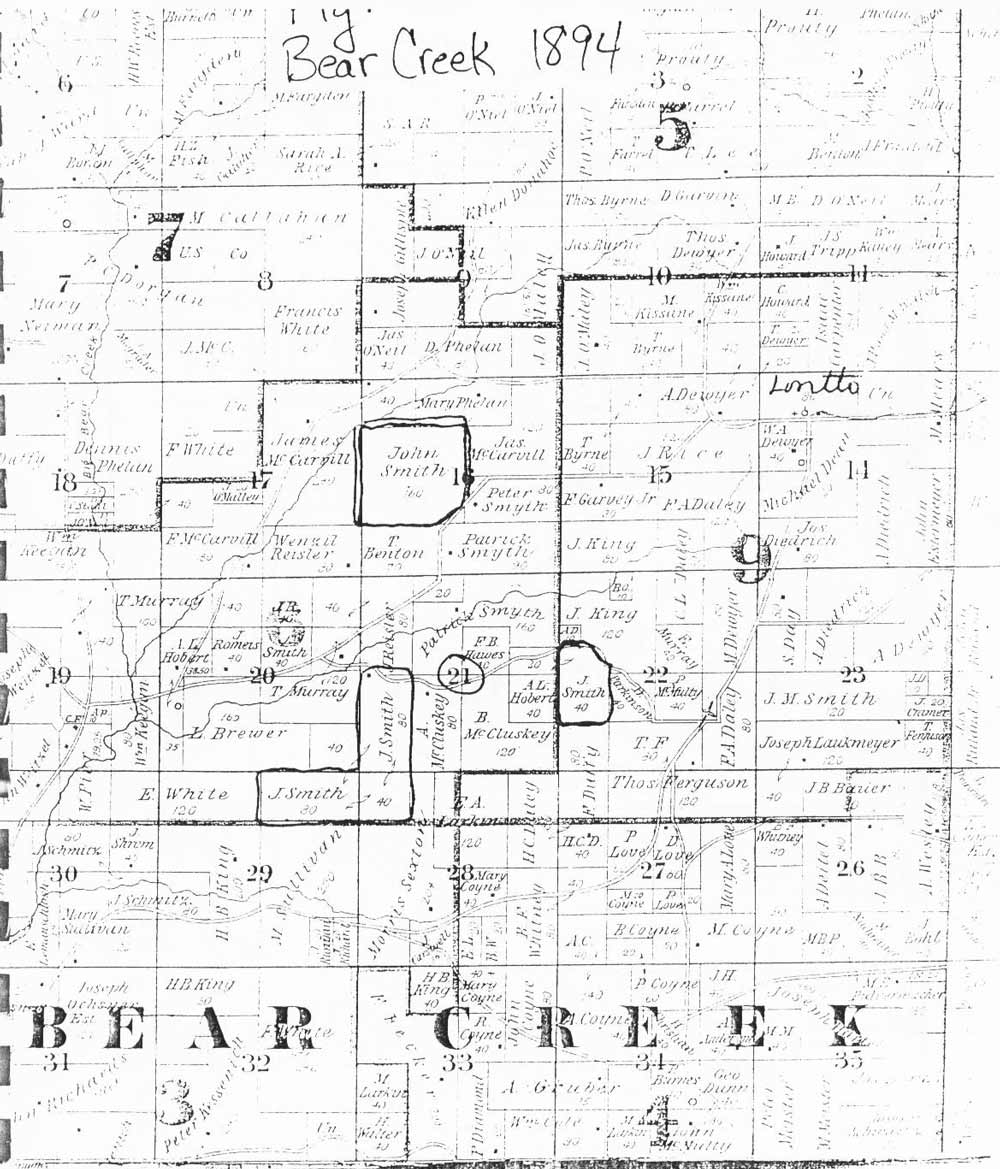
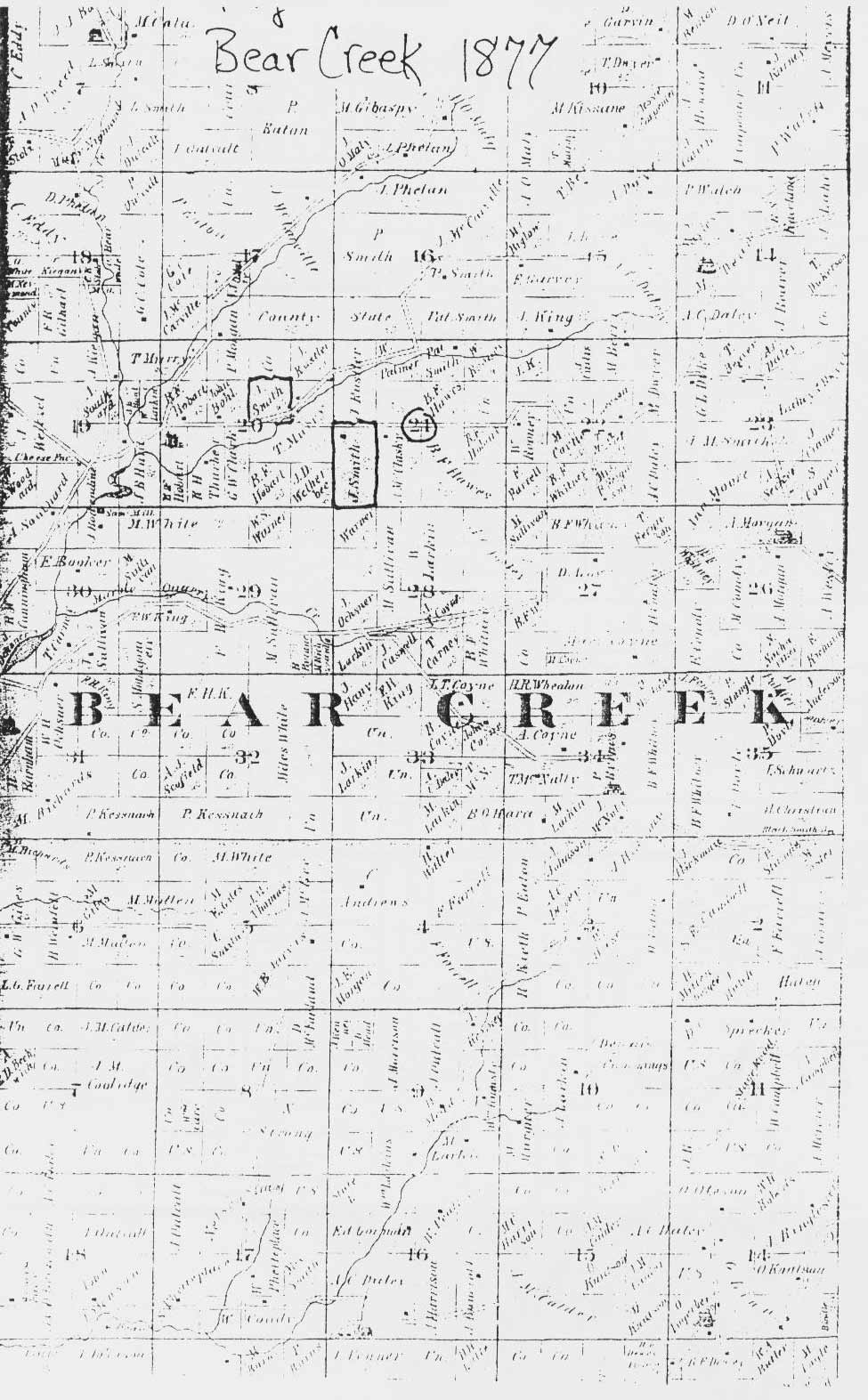
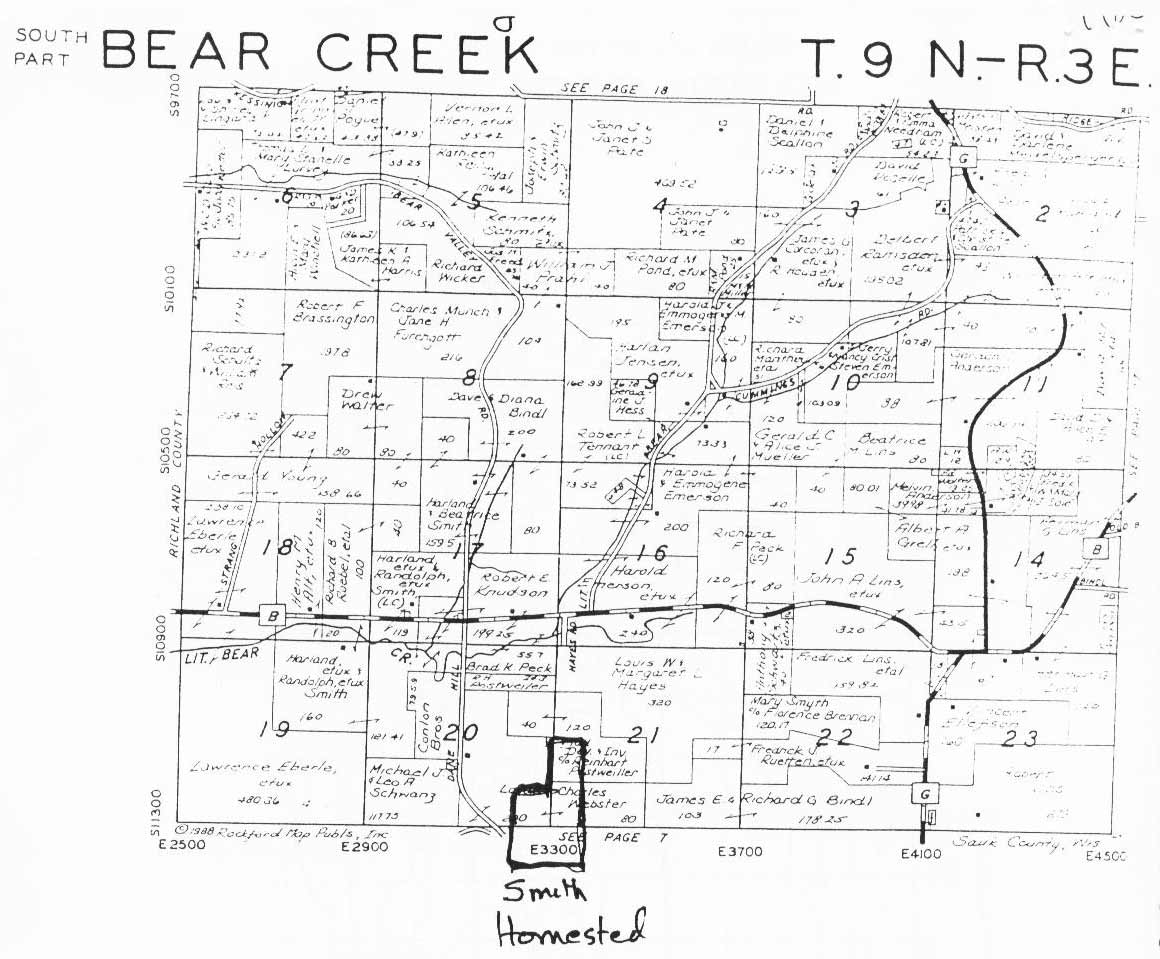
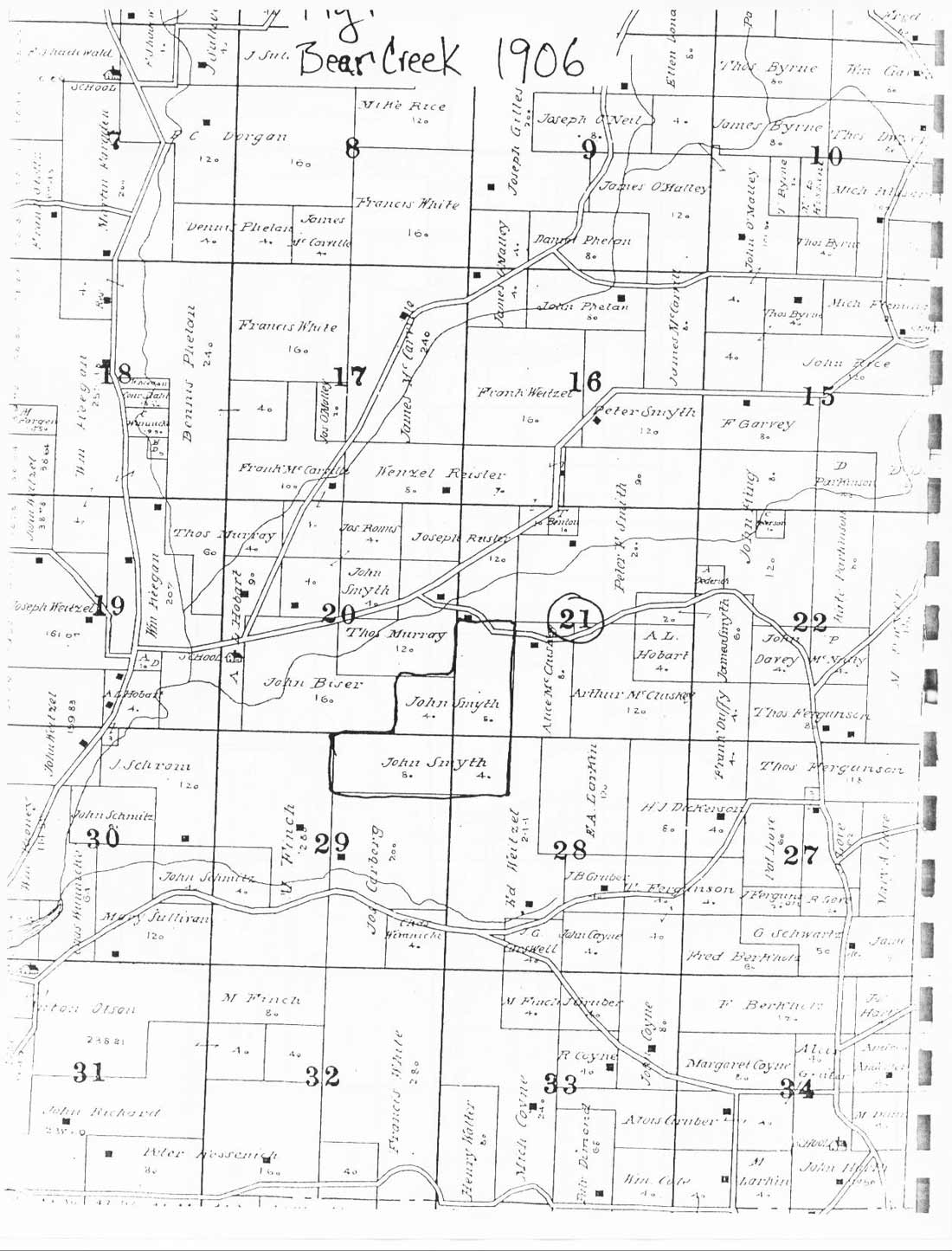
Fig. Smith Name
MacGOWAN, O’GOWAN, Smith (MacGuane).
The Irish surname MacGowan (not be confused with the Scottish MacGoun) is more often than not hidden under the synonym Smith. In Irish it is Mac an Ghabhain, i.e. son of the son and its translation to Smith (commonest of all surnames in England) was very widespread, particularly in Co. Cavan where the MacGowan sept originated. It is included by the chroniclers as one of the principle septs of Breffny. On the borders of Breffny, in Co. Leitrim, and to the north west in Counties Donegal and Sligo, the true form in English, MacGowan, is still used in preference to Smith. There was, too, in east Ulster a distinct sept of O’Gowan, a name which was also anglicized Smith. A very prominent member of this family, long resident in Co. Cavan, has recently, with the full approval of the Irish Genealogical Office, resumed the name O’Gowan. They came originally from a place called Ballygowan in Co. Down. O’Gowan, however, is very rarely met with in modern times. It is, however, to be found in the census of 1659 as one of the principal Irish names in the counties of Monaghan and Fermanagh.
Two MacGowans of Irish ancestry have distinguished themselves abroad: in the U.S.A. Samuel MacGowan (1819-1897), a Presbyterian, jurist and Confederate soldier; and in New Zealand, James MacGowan (1814-1912), statesman. Among the many alternative forms of the name recorded in the statistical returns of the Registrar-General, the most usual, apart from Smith, are Mageown and Magown.
Further confusion arises from the fact that the Gaelic surname MacDhubhain, a family of Raphoe, Co. Donegal, and also of Co. Clare, where the anglicized form is MacGuane, has become MacGowan in Co. Mayo; while Mac Gamhna (normally Gaffney – vide p. 153 supra) is also rendered MacGowan in some places.
PATRICK MCPHILLIPS
Patrick McPhillips was Susan McPhillips’ brother. The following biography appeared in ‘A Standard History of Sauk County, Wisconsin: Volume II (1918) by Harry Ellsworth Cole. What is interesting about this book is that it also cites the woman’s maiden name, which is wonderful for genealogy.
Page 946
PATRICK MCPHILLIPS is one of the progressive agriculturists of Bear Creek Township. His affairs are in a prosperous condition, and he is possessed of that intense energy and enterprise which are characteristic of the farming element of this county.
Mr. McPhillips was born in Ireland February 14, 1855, son of Michael and Mary (Smith) McPhillips. He was about thirteen years of age when his parents came to Wisconsin in May, 1868. The family lived at Bear Creek about a year and then settled on sixty-eight acres near Spring Green. The father was a man of much industry, and finally added forty acres to his original estate and continued a resident of the country districts until his death in August, 1912. The mother died in 1886. Their children were Patrick, Susan, John, Mary and Owen. Of these Mary is now deceased.
Patrick McPhillips finished his education in the public schools of Spring Green, and for the past forty years has been an industrious farmer, steadily forging ahead in the business of making a home and providing for those dependent upon him. In October, 1910, he settled upon his present farm, where he owns 320 acres. Some of this land he has since cleared, and most of it is in cultivation and in itself represents a competence. Mr. McPhillips has interested himself in community affairs, was for three years clerk of School District No. 2, is a democrat and a member of the Catholic Church.
In November, 1879, he married Catherine Burns, of Middleton, Dane County, Wisconsin. Mr. and Mrs. McPhillips are the parents of eight children, Mayme, James, Anna, Elizabeth, Rose, Susan, Leo and Genevieve. Mayme is the wife of Henry Ellefson; Anna married George Bauer; Elizabeth is the wife of Anton Weitzel; Rose married William Coyle, while the other children are still unmarried and at home.
Mayme McPhillips is a graduate of Spring Green High School and taught in the schools of Sauk County for fourteen years. Anna and Elizabeth graduated from Richland County Normal and taught in the schools of Sauk and Richland counties for a number of years. Leo is the proprietor of the Muscoda Cheese Factory at Muscoda, and has operated the same for several years.
Additional history of Sauk County, Wisconsin plus area cemetery records, click on NEXT PAGE