Ben Turgeon of South Dakota



Ben Turgeon at work with his force of two men and his horses.

Ben Turgeon and Armine Langdeau Turgeon home.
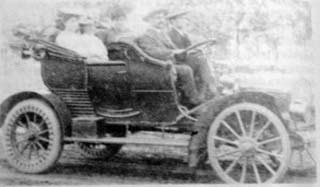
Benjamin and Armine Langdeau Turgeon and daughters, Louise and Julia and son, Francis. Circa 1905.
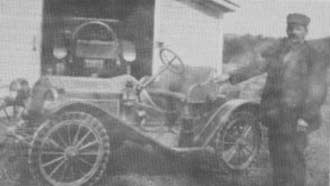
A "homemade car" perhaps built by Ben Turgeon. Benjamin Turgeon with his home made wheels. Early 1900's
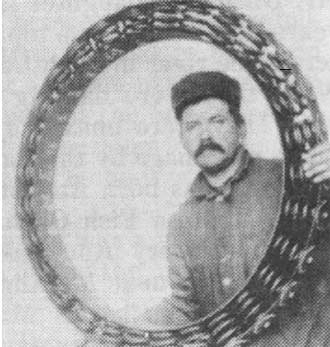
Ben Turgeon with tire. Ben with the Spring Tire he invented, about 1920 in South Dakota

Name: Benjamin F Turgeon
Born: 4 Dec 1866
Beaumont, Bellechasse, Quebec, Canada
Died: 12 Jul 1926
Burke, Gregory, South Dakota, USA
Spouse: Armine Langdeau
Spouse Born: 12 Dec 1870 in Rulo, Richardson, Nebraska, USA
Spouse Died: 24 Mar 1940 in Bonesteel, Gregory, South Dakota, USA
Marriage: 1885 in Wheeler, Charles Mix, South Dakota, USA
Father: Cezaire Turgeon b: 10 NOV 1815 in Beaumont, Quebec Province, Canada
Mother: Jeanne Marie Trachy b: 8 NOV 1822 in Paspebiac, Quebec Province, Canada
Agnes Turgeon F 1886 in Wheeler, Charles Mix, South Dakota, USA
Francis Turgeon M 1890 in Bonesteel, Gregory, South Dakota, USA
Louise Turgeon F 7 Oct 1893 in Bonesteel, Gregory, South Dakota, USA
Julia Turgeon F 6 Sep 1895 in Bonesteel, Gregory, South Dakota, USA
Ben Turgeon was Abraham Turgeon's youngest brother who was born in 1867 at Belle Chase, Quebec.
Benjamin was an intelligent,
able, versatile and self-
sufficient man. He had
scarcely an eighth grade
education but he was far ahead
of his time. He became a
rancher and a leader in the
Whetstone Valley later to be
named Turgeon Twp. He served
as Gregory County
Commissioner for four years.
Benjamin and Armine (Langdeau) Turgeon home (on left). l to r: Russell Durfee, son of Mary (Langdeau) Durfee, June 12, 1851-1876; first- born dau. of Morrice and Margaret Langdeau; Joe Emery, son of William and Adelle (Langdeau) Emery ; Benjamin, Armine , Matilda "Dollie" (Sellars) Durfee, wife of Russell Durfee; Victor Cross, and Mary "Louise"(Turgeon) Lunn, dau.of Benjamin and Armine.
Autos and the Turgeons
In 1917, when automobiles were
becoming the "thing", Ben's
stepfather, George Pete, hired
Otto Scholes to erect a cement
block garage on the southeast
corner of east main. He became
the owner of the first
automotive garage and acquired
the dealership for Maxwell
Automobilies. (A few years
earlier, Abraham had died from
ingesting medicine incorrectly.)
Ben & Armine Notes
Benjamin Turgeon met pretty
young Armine at Rulo,
Nebraska and they were wed in
1885. Armine was only fifteen
years of age, the youngest of
the Landeaux family and
Benjamin, eighteen years old,
was the youngest of the
Turgeon family.
|
||||
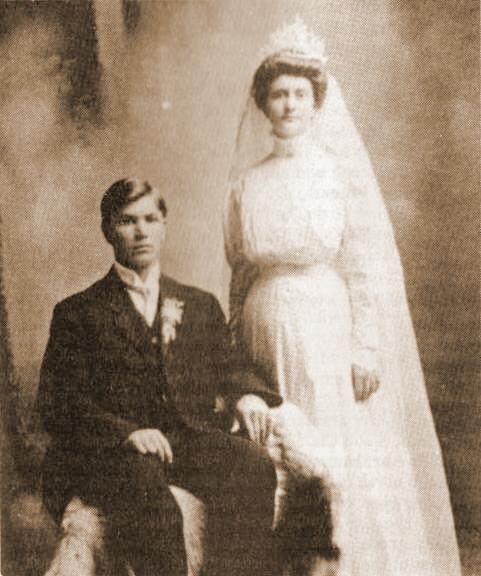
Marriage photo (click to enlarge)
The following was written by one of Maurice Langdeau and Margaret Hart
Langdeau's descendents.
"You may have noticed that the Turgeon boys married two Langdeau women.
Their parents were Maurice Langdeau and Margaret Hart. Maurice
Landeaux Sr., and early freighter boss in Dakota Territory, operated
conestoga freight wagons, drawn by mules, from Rulo west through the
Dakotas, Wyoming and Colorado. Maurice ran a freighting line from Rulo
to Fort Pierre, S.D. He was killed as his 8 mule drawn conestaga wagon,
part of a train, slipped on sidehill terrain dumping logs on him. His sons,
Henry and Maurice, Jr. continued the freighting lines. Margaret Hart
spoke only French, died in 1928 at 105 years of age."
From "The Saga of Sully Flats," by Adeline S. Gnirk.
Maurice was born in Mexico the son of a French fur trader who had
immigrated to Canada from France. Affiliated with the Hudson Bay Fur
Company he may have followed the Mississippi River trapping and trading
furs until he reached the Gulf of Mexico. Maurice Landeaux Sr., and early
freighter boss in Dakota Territory, operated conestoga freight wagons,
drawn by mules, from Rulo west through the Dakotas, Wyoming and
Colorado. He was married to Margaret Hart of Rulo and they became the
parents of Adelle, Mary, Susan, Margaret, Emily, Armine, Henry and
Maurice Jr. The sons also drove in the freight caravans owned by their
father...
Maurice and Margaret were the parents of 6 beautiful and competent
daughters who are referred to as the "Belles of the Rosebud." Margaret
Hart (Landeaux) was baptized in 1838 by the French Missionary, Father
DeSmet, at Fort Omaha, Nebraska when she was fourteen summers old.
From that day until her death, she was a devout Catholic. Father DeSmet
had succeeded in bringing peace between the Sioux and Potawatomi
Indians. The Indians gathered at Fort Omaha where many converts were
baptized that day.
____________________________________________________________________
Ben Turgeon Family Overview
Tim Smith
Benjamin Turgeon was the younger brother to our ancestor, Philias Turgeon. Philias, along with his other brothers, moved from Quebec to Dakota Territory. There they cultivated and improved their land, and helped build this land.
Abraham and Francis arrived first in Dakota Territory. They were soon followed by Onesime, Louis and our own ancestor, Philias. Benjamin was the last to move and stay in Dakota Territory. The following chart shows how Benjamin is related to the Smith siblings. He would be our great-great uncle. The following information is about Benjamin and his family. I copied a short biography for Benjamin Turgeon, which I found on the internet. The biography appears as found on-line and has not been proofed for grammar or spelling errors. Interesting enough it also mentions our ancestor, Phil Turgeon. The article states his name as ‘Phillip’ and not ‘Philias’. Philias is correct. For the longest time I thought our ancestor’s name was Phillip also.

Notes for BENJAMIN FRANKLIN TURGEON:
From "The Saga of Sully Flats," by Adeline S. Gnirk, published 1977, by the Gregory Times-Advocate, Gregory, SD, page 320-322.
Benjamin Turgeon was born December 14, 1867 in Bellechasse County, Province of Quebec, Canada, to Casare and Jane (Tracy) Turgeon. Casare Turgeon was of French descent and Jane Tracy had immigrated to Canada from London, England. They were the parents of six sons: Abraham, Louis, Phillip, Ludger, Onesenme and Benjamin, and three daughters Laida (Turgeon), Oralee Culet and Auror Labracque. Benjamin was an intelligent, able, versatile and self-sufficient man. He had scarcely and eighth grade education but he was far ahead of his time. He became a rancher and a leader in the Whetstone Valley later to be named Turgeon Twp. He served as Gregory County Commissioner for four years.
Benjamin Turgeon journeyed to Dakota Territory from Canada about 1880, to the trading post of Wheeler in Charles Mix County. Benjamin, the youngest of the family, accompanied his brothers Ludger and Onesenme who joined their older brothers Abraham, Louis and Phillip. Abraham was the manager of the U. S. Government freight lines which ran from the Agency of White Swan, near Yankton, to Fort Laramie, Wyoming. Ludger, Phillip and Benjamin freighted from Yankton, Wheeler, to Deadwood for the gold miners in the Black Hills, when this area was Dakota Territory & an Indian Reservation. Their large heavy Conestaga wagon trains were pulled by slow, ponderous but hardy oxen.
Benjamin Turgeon met pretty young Armine at Rulo, Nebraska and they were wed in 1885. Armine was only fifteen years of age, the youngest of the Landeaux family and Benjamin, eighteen years old, was the youngest of the Turgeon family.
In 1887 Benjamin and Armine Turgeon moved to her allotment on the Whetstone, the S 1/2 of Section 25, later named Turgeon Twp. Their children, Francis and Louise were given their allotments in 1890-1894. Agnes, born in 1887, died of typhoid fever eleven years later. Julia was born in 1896. By the year 1909, Benjamin had purchased the N 1/2 of Section 35, also land in Sections 23, 24, 25, and 26 from discouraged homesteaders who sold our and left the country.
Benjamin and Armine's first home was a log cabin on the east bank of the Whetstone Creek, east of the present home. Francis and Louise were born in this log cabin. When the new home was erected, the log cabin became a bunk house. The Whetstone Creek, on the western side of the cabin, ran north, wound to the west and turned south before straightening its course west. It was in this flat nest that Benjamin built his home and farm buildings. Zachary Trahan from Canada, brother of Artemese Rang Desjarlais, lived with them, as well as other senior men who helped Benjamin with his many projects. They were furnished room and board, clothing and Horse Shoe Tobacco.
Benjamin with the help of these hired hands, built his barns and corrals. The barn was a huge two story building poured with a cement floor one foot in depth with a ladder to ascend the hay mow. With a capacity of 90 to 100 cows it took the men all day to feed the cattle in the winter. They pulled the hay to the barn in bobsleds. Employing his own sawmill, cottonwood logs were sawed into planks for feed bunks, mangers, stalls and corral fences and gates. A cattle shoot and weight scale was built northeast of the barn. A sling carried the load of hay into the mow. Four saddles were hung on the walls. A workshop and bunkhouse was staged in the hay mow after the barn's completion.
Benjamin owned and raised over 1,000 head of cattle and many horses that grazed on the lush grass of the fenceless Whetstone hills and Sully Flats. Cowboys, and later Francis and Louise, herded the stock and special care was exercised during calving time. In the fall the cowboys gathered the cattle from the prairies and river hills for a big round-up at the Turgeon ranch. Noah Williams, Frank Bishop, James and Henry Emery, Russell and Thomas Durfee, Jack Sully, the Hams, George Pete and many other ranchers drove their herds to the Turgeon corrals to be branded, earmarked, castrated and sorted. The ear marks cut out of the ears of the calves were put in individual piles for each rancher to count later. Louise kept the fire hot for the branding irons. Round-up time lasted many days until all was done and the herds moved out again to the ranges. Ed Pete drove the chuck wagon and Louise and her mother baked many large loaves of bread for the hungry cow punchers.
The family had been living in the log cabin, but in 1905-06 a new, big three-story house was erected west of the log cabin and south of the corrals. The house was built of large dimension cottonwood lumber, logs cut and sawed in the sawmill by Benjamin and his men. It was built upon a five foot mortar and rock foundation. The exterior was then sheeted with brick embossed tin, and the windows were shuttered. The third story bedroom was for visiting children. The main floor had two bedrooms, a clothes closet, a large hallway, parlor and dining room. A piano and a "Regina" music box graced the parlor. Louise and Julia occupied one bedroom. The larger bedroom was for company, but was also used for Mass and Communion by the priest of St. Francis Mission, accommodating the Catholics of the valley.
The basement, the main living quarters, consisted of two bedrooms, dining and living area, and kitchen. Ben and Armine slept in one bedroom, Francis and hired man slept in the other room. An open stairway in the middle of the room led to the first floor; under the stairs was a large oak closet. A nine foot cedar post stanchion equipped with jack rested on the basement floor, convenient to shift the weight of the house occasionally. A cement bathroom under the porch was supplied with running water. A heavy oak door in the rear opened into the basement. A Delco plant provided electricity to the house for lights and water. The children kept the wood box filled for the cookstove and wood or coal heaters. During the very cold nights the hired man kept all the stoves burning.
Oak trees from the creek were cut and sawed into board lengths, planed, sanded and fitted for the door, windows, mp board trim and floors by Benjamin. The house was finished on a Sunday, whereupon a carpenter bee was held. It was much enlivened by a keg of beer bought to help celebrate the completion of the house. It was a great house and the family loved their home.
The yard was landscaped with cedars dug from the Whetstone; today reach heights of 100 and 150 feet. Louise dug and planted with a butcher knife a small cedar seedling between the house and the outhouse - it required years to attain 25 feet. The tree still waves in the breeze, but the outhouse long ago was replaced by modern plumbing.
A huge garden was planted in the valley east of the new house. It was cultivated by a horse-drawn cultivator by s ome hoeing was required. Apple, cherry and plum seedlings were planted southeast of the log cabin, protected by the native trees of the Whetstone. Benjamin owned the first Avery tractor, 1913 model which pulled a five bottom plow, to which was attached a two-section drag to break the prairie sod.
A well drilling outfit was purchased to dig an artesian well in the barnyard lot. It flowed into an oval cement tank surrounded by a cement platform. A water wheel to operate the Delco plant was located in the Whetstone Creek below the artesian overflow. This did not generate sufficient power so a shed was built to house the Delco plant, two water wheel and supply tank. Artesian water was piped to the house for bathing, but a cistern of rainwater near the house was used for drinking, cooking and laundry. The soft water was piped to the kitchen sink hand pump. Benjamin dug 10 - 15 artesian wells in the area, also digging a well for the St. Francis Church and school at Mission, S.D.
Benjamin owned and raced blooded horses. One favorite, "Whiskey Pete", won many silver cups and silver toothpicks as well as crystal ware, centerpieces and condiment sets. One crystal wine glass dated "Whetstone July 24, 1899" was won by Whiskey Pete. Whiskey Pete was a long-legged bay with a white star marking his forehead. He raced in Butte and Omaha, Nebraska and Sioux City, Iowa. Pacer horses were sold to the Omaha Stockyards as "cutting out" horses. These fine horses were pictured on calendars and mailed to cattle buyers and producers.
Benjamin invented and patented a spring tire. The tires rode easy in the hills but the springs would not stay intact. He was also a mechanic and became adept at hot iron welding, new to this area. Employing hot iron welding he invented the first cattle guards or "auto gates" which eliminated the use of gates to enter the ranch. The gate was designed with poles and old artesian rods. A small gate to the side accommodated the riding horses. He fashioned horseshoes in his shop and shod horses for the neighbors. It their watch or clock was not keeping time, he could repair, oil and clean the timepieces.
Roads to the ranch in the winters were maintained by the Turgeons. Using horses and a scoop they cleared the roads to accommodate all vehicles, including his new Franklin auto. He was also a Franklin auto dealer for interested buyers in the area.
A super salesman convinced Benjamin to buy shares in an oil venture in Wichita Falls, Texas. Benjamin became wealthy when "black gold" shot skyward from his wells. He traveled to Texas several times a year to check his investments. On a return trip from Texas, the family stopped at Omaha. Louise purchased a $25 pair of tan, 18- button hightop shoes from the Brandeis Store. The clerks stared in amazement when she paid the shoe clerk with a $100 bill given to her by her father, but of course the change was returned to him.
Friends, relatives or neighbors often fished or seined on the big lake-pond near the farm buildings. Uncle William Emery loved to spiel tall tales to the children especially about the large amount of money he had salted away in a barrel, these tales delighted the children.
Benjamin and Armine had labored long and diligently, the time was near to retire. In 1918 he sold the ranch and 1/2 interest in the cattle to Fred Harris, Benjamin's former hired hand. Later it was transferred to Otto Nightingale. It again changed hands, becoming the property of a Texas cattle company, with foreman Robert Taylor.
The Turgeon home which had seen so much living was demolished. It was pushed into the basement, covered over and planted with grass. A new modern home was erected. The barn was considerably reduced in size. However, some of the original barn interior, stalls, mangers, corrals, scales and artesian well are still in use.
Benjamin and Armine Turgeon retired to Bonesteel, S.D. Benjamin Turgeon died July 12, 1926 and Armine Landeaux Turgeon died March 24, 1940 at Bonesteel. They were the parents of four children: Agnes 1886-1897; Francis (1890) married Nettie Davis, children Dolor, Richard, Ray, Laura, Frances, Loretta, Donald and Jerry; Louise (1893) married Henry Lunn, (dec.), children Helen, Marie, Dorothy and Henrietta; Julia (1896) married Richard Gravel, children Garneta, Rex and Janice.