Nenagh Rate Payers
|
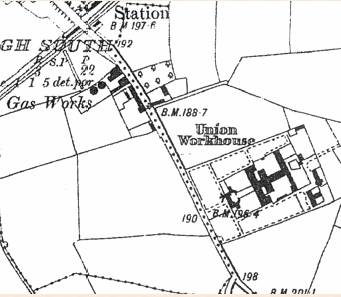
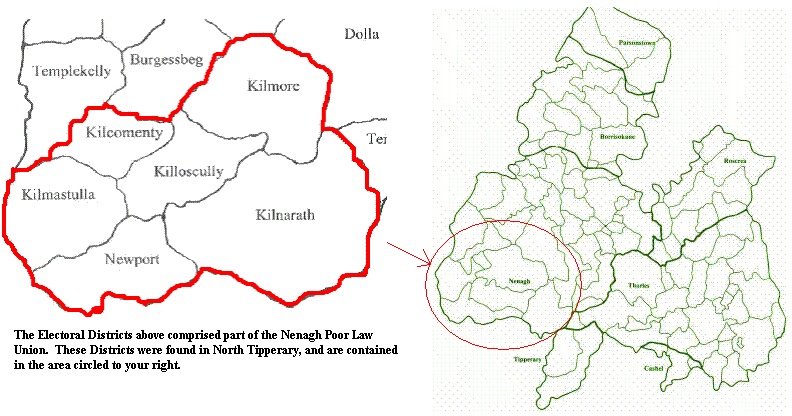
Nenagh Poor Law Union Records North Tipperary Ryan and Hill Genealogy As written before, most 19th century Irish census records were destroyed by fire or shredded. The Nenagh Poor Law Union tax records are considered one of the major ‘census substitutes’ for County Tipperary. The area covered most of Northwest Tipperary, and is the same area where our ancestors hailed. It lies wholly within County Tipperary, which is in the baronies of Owney and Arra. The Nenagh Poor Law Union covered an area of 184,712 acres, and in 1831 contained 89,891 people. What names will you find here? I highlighted any entry for James Ryan that I could find in these records. However, other surnames are highlighted which have been connected to our family tree. You will see entries for the following surnames: Walsh, Ryan, Hill, McDonnell, Casey, Fogarty, Humphries and Russell. Most of these surnames appear in our family tree. Some surnames appear as Ryan baptismal and marriage sponsors in Ireland. The Nenagh Poor Law Union was created to serve the poorer portions of its population. The Nenagh Union workhouse, a seven acre site half mile south of Nenagh, was designed to accommodate 1,000 inmates. It received its first pauper on April 28, 1842. The Great Famine started shortly afterwards.
During the famine in the mid-1840’s, sheds and sleeping galleries were erected to accommodate an additional 260 inmates. In 1847, a 70 bed fever hospital was erected. The Workhouse was not designed to accommodate the thousands of people who needed help during the height of the Great Hunger. 1841 Population: Kilcomenty 3,526; Killoscully – 3,099; Kilmastulla – 2,046; Kilmore – 5,138; Kilnarath – 3,386 (including Abington Civil Parish); Newport – 4,254. We have fully transcribed the tax records for these Electoral Divisions. The Poor Law Unions appear to have started the emigration of females to Canada in the late 1840's. Many of these young women were from the Unions in Ireland, who sent women at the time of, or just after, the famine. In fact, the Poor Law Unions were responsible for sending many Irish overseas to escape poverty and the ravages of the great famine. Records appear to show Edward Hill and his family were evicted from their land in the late Eighteen Forties. Did the Nenagh Poor Law Union assist the Hill family in their move to America? |