Book of Ryans - The Catholic Church
|
|
James Hugh Ryan |
|
|
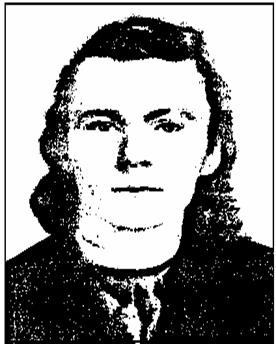
Father Abram Ryan |
Patrick Ryan
Patrick Ryan, like Patrick John Ryan, also became a titular bishop in the United States, and his early years were very similar to Patrick John Ryan's early years. He was ordained a bishop in Nashville in 1869; but died of "the yellow fever in Chattanooga, being given the last rites of the Church by his younger brother, Father Michael Ryan, who was visiting in Chattanooga." [1] Although Bishop Ryan's ecclesiastical career was brief, he was credited with several noteworthy accomplishments.
He was born in Ireland, and as a young child moved into the Missouri settlement of Cape Girardeau. In the mid 1800s Cape Girardeau and St. Louis were strongholds of the Catholic faith, particularly Irish Catholics searching for economic security and religious freedom. He started his priesthood in Chattanooga, moved to Nashville as Bishop, and probably was the chaplain mentioned in the annals of the Eighth Tennessee Regiment.
Before the Civil War, Chattanooga was a small frontier town, but after the discovery of natural resources surrounding the city, it grew to become a manufacturing and trade center for the area. As the city grew, so did the Catholic church. The original pastor, Father Brown, built a small wooden frame church, but it was later replaced by a larger structure. By the mid 1870s Father Patrick Ryan, then pastor of this church, was also assisted by Fathers William Walsh and B.J. McNally. These men built the church, rectory and a convent for the Dominican sisters in 1876 which continued in use until the 1930s. These Dominican sisters created a select school for young girls called Notre Dame de Lourdes, and was a forerunner to other parochial schools which has become renown in the Chattanooga area.
Edward Francis Ryan
Edward Ryan was born in the United States in Lynn, Massachusetts in 1878. Prior to being ordained a priest in 1905, he studied theology at Boston College and completed his studies at North American College in Rome. He was a pastor at Holy Name Church at West Roxbury, Vermont, and in 1944 he was appointed Bishop of Burlington, Vermont, and held that capacity until his death later that year.
Steven Vincent Ryan
Like many other Catholic priests of his day, Father Ryan came to the United States to minister to the growing frontier Catholic populations. Unlike many of his contemporaries, he was born in Ontario, Canada, rather than Ireland. He was born, according to church records, at Almonte in 1825 to Martin and Catherine (McCarthy) Ryan, and his family later moved to Pottsville, Pennsylvania in 1828. He studied theology at St. Charles Borromeo seminary in Philadelphia, and following his training, left for St. Mary's seminary in Barrens, Missouri, where he was ordained into the priesthood in 1849. He provided strong leadership within the church until his death in Buffalo, New York, in 1896.
At the time Reverand Ryan began his clerical duties, the country was embroiled in anti-Catholic sentiments, largely due to the heavy streams of uneducated and unskilled 'famine Irish' entering the United States. This shaped his theological career while serving ministerial functions in parish work and later at various seminaries where he held teaching assignments. He taught at St. Mary's until 1851 and later taught at St. Vincent's College in Cape Girardeau, Missouri. At Cape Girardeau he was also the local pastor, and while pastor was elected Visitor General of his Congregation in the United States. He was later appointed bishop of Buffalo in 1868 where he founded the diocesan paper, "Catholic Union", which in recent times has been renamed the "Catholic Union and Times."
He assumed many controversial positions regarding church teachings, such as the church's role in education and defining the boundaries of his own bishopric. Although his career had many milestones, the most controversial were the disputes he held with Bishop McQuaid of Rochester, New York, over the nomination of Sylvestor Malone as reagent of the University of New York State. Reverand McQuaid sought the investure of a personal friend to this post, while Bishop Ryan sided with Archbishop Ireland on Malone's nomination. The Bishop of Rochester sought to reduce Ryan's influence by carving up his bishopric into smaller segments because of Bishop Ryan's opposition to MCQuaid's choice for reagent.
Vincent J. Ryan
Vincent J. Ryan was born in Arlington, Wisconsin in 1884. He received his Catholic education at St. Francis seminary in Milwaukee and continued his education in Minnesota at St. Paul Seminary. He was ordained to the priesthood in 1912, and held many assignments as pastor in towns located principally in North Dakota. He was Chancellor of the diocese of North Dakota at Fargo from 1912 to 1934. Between 1934 and 1940 he became the diocese administrator and Vicar General, and after 1940 was appointed Bishop of Bismarck, North Dakota.
Bishop Ryan was actively involved in upgrading the economic welfare of American men, women and children. He wrote numerous articles on the subject, and later became President of the Catholic Rural Life Conference in 1939 through 1941. Bishop Ryan died in Fargo in 1951.
Abram Joseph Ryan
One of the more colorful pastors bearing the surname of Ryan was Abram Joseph Ryan. Unlike many celebrated Ryans of his day, he was never appointed to any higher elevation than priest; however, he assumed a great deal of notoriety for his undying patriotism for the South and the poems that he wrote, including `The Conquered Banner' which earned for him the title "Poet of the Confederacy."
Reverand Ryan was born in America at Hagerstown, Maryland, to poor Irish immigrants. His parents, Mathew and Mary (Coughlan) Ryan, came from Clonmel in County Tipperary and settled in Norfolk, Virginia, sometime after 1828. He studied for the priesthood at Niagara Falls, New York, and at the Vincentian novitiate in Germanstown, Pennsylvania. While a student at the Vincentian Seminary, the South ceded from the Union and clerical participation in these events was censured by church officials; but after Ryan's ordination into the priesthood in 1861, "He defied and ignored the ecclesiastical superiors in becoming an unofficial chaplain to the Confederate armies."[2] Because this was in defiance to the Vincentian order, he left the order and became a secular priest.
Ryan was never an official chaplain for the South; nevertheless, he roamed among the Confederate armies ministering to their spiritual needs in Southeastern Tennessee. Why Father Ryan defied the Vincentian order may never be fully explained, though, it has been suggested that he had feelings of guilt over the death of his brother, David, who served the Confederacy in the Kentucky regiment. Surviving documents also showed that Father Ryan had unsuccessfully tried to be commissioned as a military chaplain for the Confederate Cause.
Father Ryan has been described as melancholy, unworldly, living in the depths of romantic imagination, and independent.[3] Yet he would have great mood swings, and in public was described as "a spellbinder, like William Jennings Bryan or Fulton Sheen."[4] He was renowned as a speaker and a poet, and remained loyal to he South throughout the rest of his life; however, he always placed his role as priest first. After the war he served the parishes of Biloxi, Tennessee; Nashville, Tennessee; Knoxville, Tennessee; and Macon, Georgia. At Nashville he performed ministerial duties at the Cathedral and he also acted as pastor for several small communities surrounding Nashville. Like many Irishmen of his day, he experienced guilt with the success he achieved, and at times found it difficult to accept.
His poetic abilities became recognized while he was pastor at Knoxville, because it was here that he wrote the `Conquered Banner' which earned him the title `Poet of the Confederacy.' The `Conquered Banner' gained national prominence after a friend sent his poem, written under the pen name `Moina', to the `New York Freeman's Journal', a well-read Roman Catholic periodical. Other poems that he wrote also became famous in the South including `The Sword of Robert E. Lee', `March of the Deathless Dead', and `In Memory of My Brother.'
Not all of his poetry centered around the Civil War. Father Ryan also wrote many pieces that displayed his spiritual side, and they were published in a collection of poems entitled `Father Ryan's Poems.' He also wrote a book of devotions called `A Crown for our Queen' in 1879 and `Poems, Patriotic, Religious, Miscellaneous' in 1880. During this time he became a member of the editorial staff of the `Morning Star' in New Orleans, and from 1872 to 1875 he became its editor-in-chief. Even though much has been written about his sympathies to the Southern cause, he was equally as sympathetic to other human miseries, both physical and mental. While in New Orleans he spent much of his time at Gratiot prison where he ministered to smallpox victims. In 1881, he retired from religious life but continued to write verse describing the glamour and nostalgia of the South.
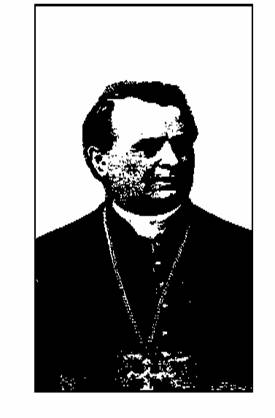 Patrick John Ryan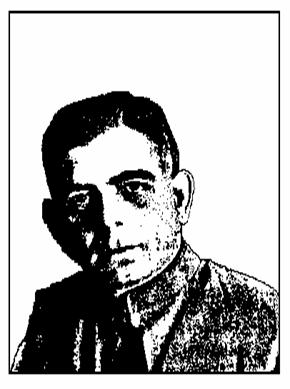
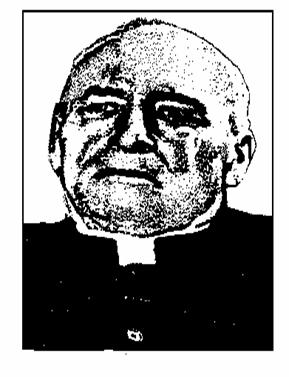 John A. Ryan