Book of Ryans - The 20th Century
Politics and the Machines
My son is a great politician,
He works on the big boulevard,
They say that he soon will be alderman,
For now he's the boss of the ward.
Some day he'll be running for president,
His equal, sure, never was seen,
And if he gets into the White House chair,
He'll paint it an Emerald green.
'Patsy Brannigan'
Harry Kennedy, 1891
By the late 19th century men of Irish descent dominated municipal government in several major eastern American cities including Boston, New York City and to a lesser extent Philadelphia. As Irish-Americans infiltrated public works and other government offices which employed thousands of workers, they were able to use their influence to hire others of their 'own race' to lucrative political appointments. The use of patronage to dispense jobs became the new source of political power by the turn of the century. Most surprising was the Irishman's ability to assimilate into the political environment as easily as he did, considering that most of them were Catholics and were traditionally prohibited from governing Ireland's affairs. Conventional wisdom suggests they would not have been interested in such matters, or if becoming involved would have failed miserably due to limited governmental experience. However, the Irish American did become involved, and as a race used the process better than anyone before them.
The Irish-Americans began their political power using grass roots politics to solicit electoral support at the neighborhood and ward level. While the prevailing political ethos stressed individualism, the Irish Americans introduced a new code of behavior which aggressively pursued social and educational reform. As a result of their ethnic communal commitment, the Irish instituted a new social consciousness unknown in American history. While Boston and New York City found itself absorbing unskilled immigrants into a business environment which provided few employment opportunities, Philadelphia Irish Catholics failed to control the urban machine because the Irish Americans generally had work skills which kept them from seeking government jobs; however, in its place emerged the 'contractor-boss' who was able to employ large numbers of unskilled laborers
The Contractor boss was one of the central figures in 19th century municipalities, and because a Contractor employed large numbers of people they possessed strong political connections and power. One of the most influential contractors of this period was James Ryan, a building contractor born in 1848 in Kilkenny, of Philadelphia, Pennsylvania. He emigrated to the United States with his family, and began his work career digging and laying tracks for the railroads, and being an enterprising young man began to subcontract laborers to the railroads to perform this exhausting work. Some of his most known work was bringing the Baltimore and Ohio Railroad to Philadelphia and constructing the Reading Terminal Building which was an pink colored Italian Renaissance facade which housed the Reading Railroad, a company which controlled the richest coal deposits in northeast America. The Reading Railroad's president was Franklin Gowan, a man whose hatred of the Irish was well known. He was quite proud of almost single handedly crushing the coal miner's revolt in the Pennsylvania coal fields by eliminating suspected Molly McGuires. Dennis Clarke noted that even though Gowan hated the Irish, he depended upon Ryan's contracting expertise to complete his building. Gowan needed the cheap labor which James Ryan provided to complete his 'monument' cost effectively. James Ryan was able to use Irish laborers to work on the Reading project:
They needed work and money. They would sup with the devil, long spoon or no. They would live off the corporate enemy that had persecuted them. Ryan was not a man to let passions divert him from lucrative enterprise. He built the Reading Railroad's monument and in the process brought still more Irish to the city after each of his trips to recruit workers from Ireland.[1]
The Irish American's preoccupation in urban politics ultimately manifested their cultural background, and subsequently their overzealousness and tendency towards physical disputes on occasion led to tragic consequences. An election incident in New Bruswick, Canada, for example, recorded a disturbance between the residents of Chatham, whose citizens were predominantly Irish Catholics employed by the shipbuilder Joseph Cunard, and the towns of Newcastle and Douglastown, located on the Northeast side of the Miramich River and predominantly populated by English, Scotch, and Irish Protestants. The city's first election failed to produce a winner among the candidates, so a second election was held in 1842. The outcome of this election was not popular with the Chathamites, and a riot broke out at the polling site after heated words were exchanged. This altercation involved 30 to 40 men, of which the majority "were injured and an elderly publican James Ryan died of wounds received."[2]
The Irish were involved in colonial affairs almost from the beginning, principally in the southern states, and they greatly expanded their participation as the colonies broke loose from English protectorate rule in 1775. Ever since America elected its first Congress, there have been at least 10 United States Senators and Representatives who bore the surname of Ryan or Ryon. Some of these have been highlighted in the 'Biographical Directory of the United States Congress, its Bicentennial edition'. The Ryan Congressmen found among this illustrious list includes Elmer James Ryan (b. 1907), Harold Martin Ryan (b. 1911), James Wilford Ryan (b. 1858), Thomas Ryan (b. 1837), Thomas Jefferson Ryan (b. 1890), William Ryan (b. 1840), William Fitts Ryan (b. 1922), William Henry Ryan (b. 1860), and John Walker Ryan (b. 1825). William Ryan, born in County Tipperary in 1840, was the only foreign-born Ryan to serve in Congress. Several of these representatives also served in the United States military: Thomas Ryan serving the Union army during the American Civil War; Thomas Jefferson Ryan, pilot in World War II; William Fitts Ryan who served in World War II in the 32nd Infantry, and John Walker Ryan, a member of the Bucktail Regiment in the U.S. Army. Perhaps the most recognizable Ryan to serve in the American Congress was Leo Joseph Ryan. It was not his political contributions which yielded him notoriety, rather it was his involvement in the collapse of the Jonestown, Guyana, cult led by Jim Jones.
Guyana achieved independence from England in 1966, and under the country's first Prime Minister, Forbes Burnham, moved to adopt socialist economic policies. The socialistic principles attracted many like-minded persons and groups to Guyana including the Peoples Temple, an United States religious cult led by Jim Jones, a Protestant minister. The Peoples Temple erected a settlement in a northern province and named their new city Jonestown in honor of Jim Jones. The settlement grew as newer members made their way to Guyanan, but concerned U.S. citizens grew increasingly alarmed that cult members were not allowed to associate with their former friends and family. Allegations began to spread that members of Jonestown's community were being held against their free will. Family members organized and unofficially called themselves the 'Concerned Relatives', and they began writing letters to politicians seeking help in retrieving family members from Jim Jone's control. They wrote of family members being imprisoned against their will, constant torture for outspoken members who wished to return to the mainland, but what received the most attention was their claim that Jim Jones was planning to take his religious followers to Russia to ensure that members could not return home. This caught the attention of Leo Joseph Ryan ,a young Congressman from California, who went to Guyana to investigate the 'Concerned Relatives' allegations against Jim Jones.
Congressman Ryan arrived in Guyana with 20 members of the Concerned Relatives, and although Ryan came to investigate the charges leveled against the Jonestown cult, Pastor Jones believed that Ryan's only desire was to provoke an incident. When Leo Ryan asked to interview a few of his followers, Jones refused admission to the city. Ryan angrily said that he was coming in one way or another, and while he may have believed he was representing their interests, many of Jonestown's residents whom were predominantly of African-American origin saw his intervention as another example of White America's racist puffery. Michael Prokes, one of Jonestown residents, later said that Ryan's determination to enter the compound merely showed that he was "an arrogant white person representing the American establishment which has failed the blacks and poor."[3]
While meeting with Jones outside the Jonestown compound, Leo Ryan was seriously wounded by an assailant identified as Don Sly, a partisan of Jim Jones. During the attack Jones continued to shout justifications for the knifing and suggested that it was Ryan's fault for this unprovoked attack. Ryan was grabbed around the neck by one man while Sly penetrated the knife near his heart. Witnesses further described the scene during the U.S. House Committee Investigations:
"It was at this point that an unsuccessful knife attack was made on Mr. Jones' life. The attacker, identified as Don Sly, was fended off by Mr. Lane and others but cut himself in the process. Mr. Ryan's clothes were splattered with blood...Despite the attack, Mr. Ryan reportedly planned to remain in Jonestown and eventually left after being ordered to do so by DCS * Dwyer (Chief of Mission)."[4]
Ryan retained his composure throughout this episode, but the pressure to remain against Jones' hostile agents forced his party back to the Guyana airstrip. It was near his plane that Ryan was shot to death by Larry Layton, one of Jones' henchmen. The death of Ryan sparked Jones to order his followers to drink juice laced with cyanide, a procedure which his followers had rehearsed many times before. This mass suicide left over 900 people dead, and the news of this large death count forced Congress to quickly investigate the events leading up to these deaths. The Congressional committee discussing the cult's tragedy eventually focused on Ryan's mishandling of the situation. The State Department zeroed in on his imaginary misconduct and attempted to shift the massacre's blame squarely on his shoulders. Immediately journalists and novelists wrote of Leo Ryan's poor judgment, and derided his poorly conceived plan to interview "misguided residents" of Jonestown. The U.S. government also distanced themselves from this incident in Guyana, and during a news conference in 1978, then President Jimmy Carter, further stated that his administration had no prior knowledge of Ryan's journey and acknowledged that constitutionally Ryan had no business of interviewing U.S. citizens in Guyana:
"It is unconstitutional for the government of our country to investigate or to issue laws against any group, no matter how much dey depart from normal custom...I must point out that Congressman Ryan did go to the Justice Department several weeks or months ago into the so-called brainwashing aspects of a few religious cults around the country. My understanding is that the People's Temple was not one of those thought by them to be indulging in brainwashing."[5]
This attempt to distance the U.S. Government from Ryan's activities became the fodder of journalists and authors covering the mass suicide at Jonestown. Congressman Ryan, now dead, was being repudiated in many circles and he became the scapegoat for all that went wrong at the Guyana compound. Subsequently, as additional witnesses testified, the politician's and news media's hastily placed blame could not be substantiated, and through additional testimony it was acknowledged that Jim Jones was solely to blame for the disaster. His paranoia of outside influences was repeatedly shown through the suicide rehearsals which had become ingrained in their religious practices, and if Ryan hadn't appeared in 1978 it was quite obvious that this eventual conclusion would have occurred at some later date anyway.
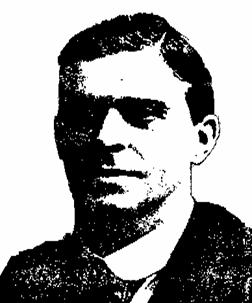
The Ryan's involvement in politics was not solely limited to the United States. After the famine many Ryans became active in Ireland's political evolution which attempted to create a country dropping England's racist and pro-Protestant doctrines. Political analysts wrote of Ireland's developing Catholic enfranchisement which was promoted by Ireland's liberal party, and men such as Sam Ryan tried to persuade his fellow countrymen to push for revolutionary reform and continue supporting his radical ticket. In the Appleton 'Crescent' his colorful analysis suggested that the old-line politicians could not be trusted, but he also believed that the radical groups needed to be held accountable for the money they received from their worldwide contributors. He was concerned that these men "would sell Ireland's hopes for a British guinea and his soul to the devil for a Yankee greenback."[6] Several politically involved Ryans have already been described, but one of the more notable politicians and civic activists was Dr. James Ryan, born in 1891, in County Wexford. He was involved in the takeover of the General Post Office (GPO) building in Dublin during the Easter Rebellion, and for his involvement was imprisoned in 1920. He found himself opposing a treaty drafted by England after his release in 1921, and found himself embroiled in another demonstration in 1922. He aligned himself with the Four Courts garrison, and again was detained by the Provisional Government. He continued opposing this treaty while in prison by going on a hunger strike, but he was released before his food deprivation caused any great harm. Dr. Ryan was later elected to the Dail (House of Deputies which is the equivalent of parliament or U.S. House of Representatives), though, he was only a member in absentia. He remained absent from the Dail to demonstrate his opposition to English authority in Ireland. He later helped found a new political party, the Fianna Fail, in 1926, and in 1932 he participated in the first Fianna Fail elected cabinet where he became its first Minister for Agriculture. He later was appointed as the Minister for health and Social Welfare, Minister for Finance, and in 1965 elected to the Senate. The life of Dr. James Ryan along with other members of his well-known family has been equated with the Kennedy's rise in American politics. He was urbane, handsome and charismatic; and much like the American Kennedys, the Ryans of Wexford also were remembered for their aristocratic persona.
|
|
Dr. James Ryan |
In Canada, the Ryans also ennobled themselves in government circles, most visibly in the province of Quebec. Claude Ryan in 1978, publisher of 'Le Devoir', succeeded Robert Bourassa as leader of Quebec's Liberal party, and he immediately found himself entangled over the issue of Quebec's sovereignty. His party controlled the National Assembly until 1981, and although he championed controversial democratic reforms and stimulated intellectual revival, his leadership in domestic issues faltered; and he was forced to resign his post the following year. Ryan lost support because he opposed constitutional changes which would have made Quebec and independent state. The Quebec nationalists also distrusted his motives, and his methods of dealing with people merely reinforced their perceptions of Ryan's intent. Ryan's political dogma contributed to his demise, but it was his method of relating to those people which supported his election that further accelerated his political failure:
Ryan's unforgiving personality and unbending style of leadership alienated him more than his rigorous intellectualism attracted them. But he consistently always refused to pander to his colleagues' tastes of the exigencies of politics...His reputation as an autocratic leader increased. Caucus members complained that he listened only to those who told him what he wanted to hear.[7]
Claude Ryan remained in the National Assembly (MNA), and after another Liberal victory in 1985, he was appointed minister of education for the Bourassa government. Time apparently heals old wounds because it was only a few years before this appointment that Ryan accused Bourassa of "weakness and talked about setting up a provisional government to replace him."[8]
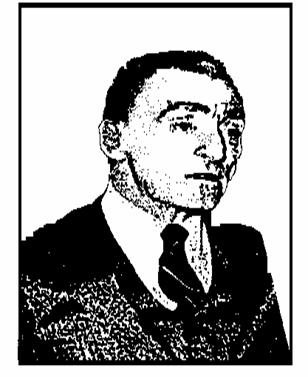 Claude Ryan, Premier of Canada