TOOR
TOOR Village, on the SW Edge of Keeper Hill
Click to Enlarge |
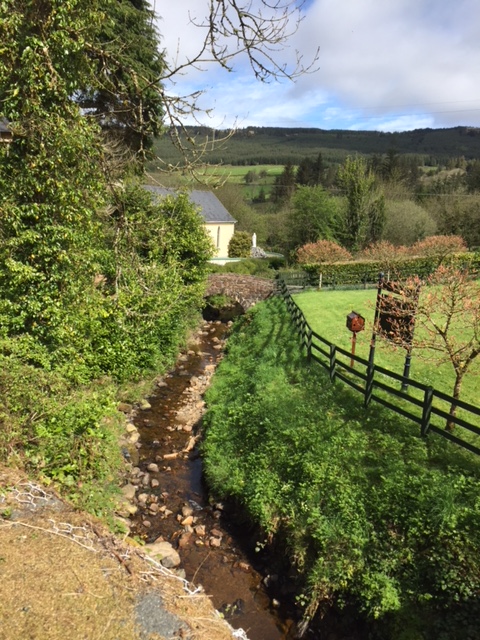
The road from Gortnaskehy to Toor is very narrow which is bordered with high thickets on both sides of the road. While narrow, the distance from our ancestors' home to the church at Toors, and fortunately is less than 10 minutes by automobile. As a first impression, Toor was one of the most picturesque places that we visited while touring Ireland. If it weren't for the despair, times of famine, and rebellion, our ancestors may never have left this beautiful spot in Tipperary. While there, we met several people from Toor who were very gracious and hospitable. |
|
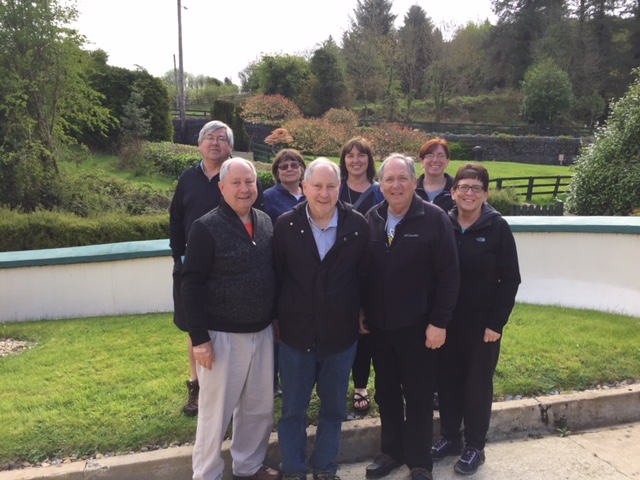
Our first stop was the church. On the exterior, the church has a plaque dedicated to the victims of the Great Famine. As many local families left due to the potato blight and subsequent plague, it seemed appropriate that we take a photo in front of this plaque memorializing famine victims. While the Ryans came to America in the 1860s, Bartholomew Campbell, Nancy Ann Campbell Ryan's brother, came to Iowa earlier in the 1850s. |
||
Click to Enlarge |
Click to Enlarge |
|
Click to Enlarge |
On our first day, we took several group photos, but as the week progressed, we didn't take as many group pictures as we did on day one. The temperature was in the 70s and the skies were clear. It was a beautiful day, and the grand day welcomed us warmly to the Ryan homeland. However, it would be cooler and wetter as we made our way North to Donegal..Pam had to even buy a raincoat. This photo was taken in front of the church at Toor. When we first started researching our |
|
Ryan family line, it was our belief that James and Mary Campbell attended church services in Doonane, a small village in Killoscully. The reason is because the marriage document stated that they were married in Doonane. Later, it became obvious that the priest registered this marriage which most likely took place in a home in Doonane. It is possible that the marriage took place in the Humphreys home, who was related to the family. It is also possible that the wedding may have taken place in a home at Gortnaskehy (which the maps sometimes show as Doonane). |
||
Click to Enlarge
|
Click to Enlarge |
|
|
||
|
Click to Enlarge |
|
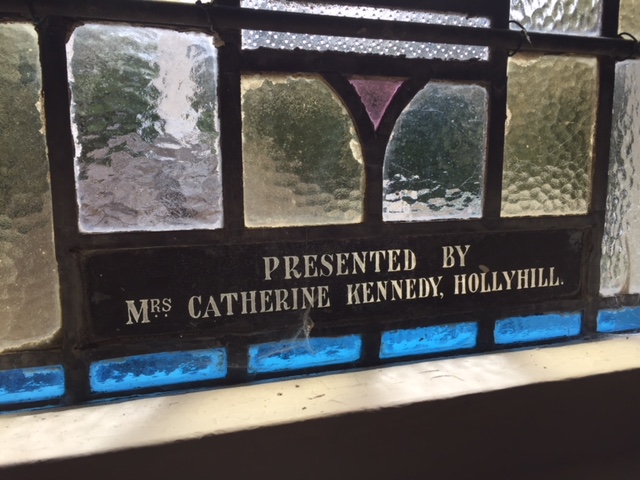
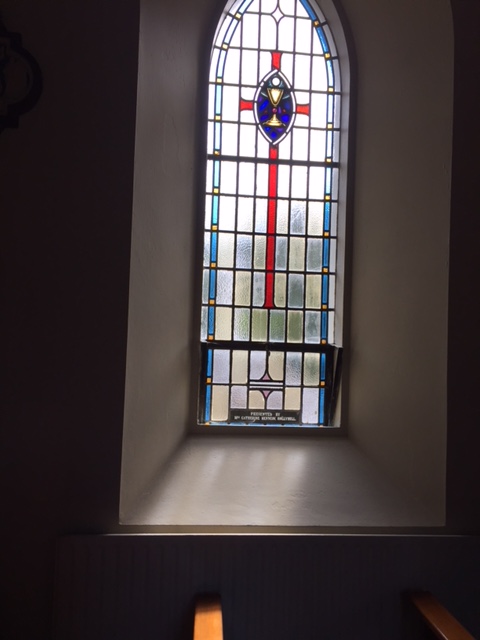
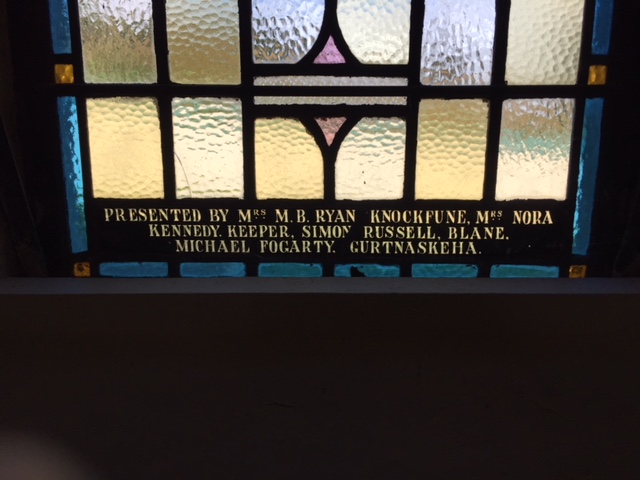
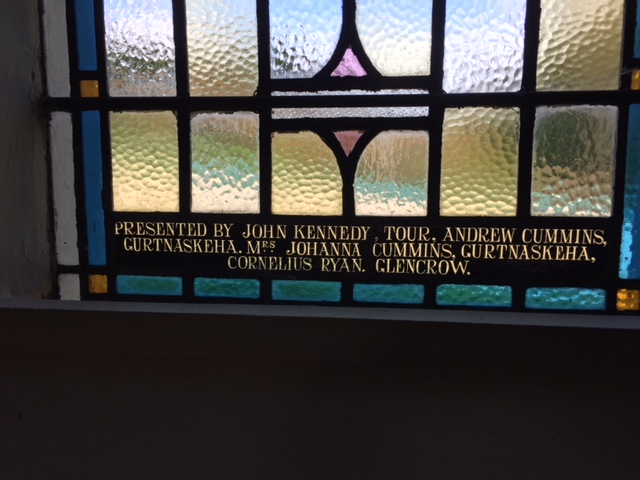
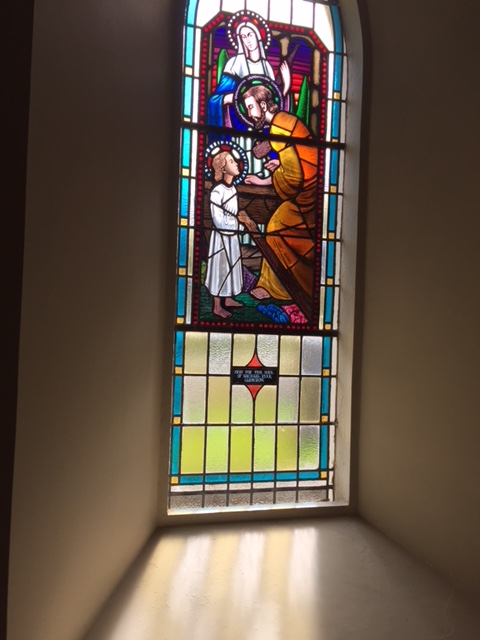
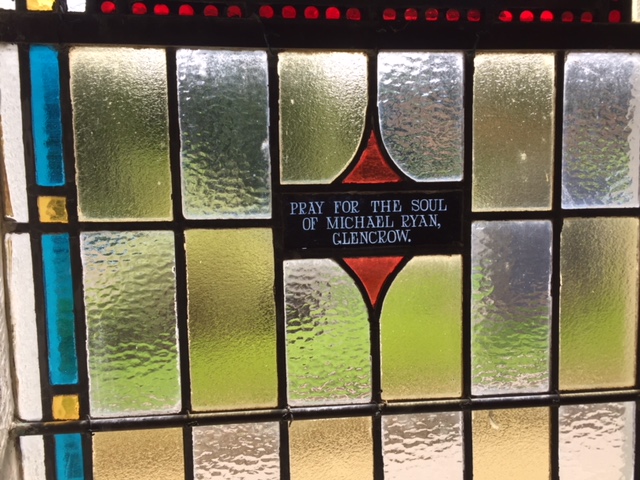
The Irish churches in America reminded us of our American churches where families would support the construction of churches, and their contribution would be remembered by plaques on the walls or inscriptions on church windows. What made these windows special is that so many of the people listed were from our family's connection to this |
||
church in Toor: Ryan, Kennedy, Fogarty and other names attached to our family lineage. The quiet solitude of this peaceful village provided an opportunity to reflect on our great family's presence in this part of Tipperary. |
||
Click to Enlarge |
||
Click to Enlarge |
|
|
|
|
|
Story of Relocation from Toor, Gortnaskehy and Keeper HillThis is the story of Relocation, how seven Families moved from one part of north Tipperary in the mountains of Keeper Hill Toor Newport. The reason for the relocating was that in 1926 The Irish Land Commission received a report that there were too many people living in this area of Toor; even though Emigration had been high since famine times. The area was mountaneous and filled with hardship, local farmers had no way of increasing their acreage to appropriate holdings and this move provided an opportunity to stay within the county, even though it would be 40 kilometers away from Keeper Hill. John Kennedy from Glencrow was the man in charge of the relocation and it was he who approached the Families in the area in Feb 1927. The Irish Government had set up the I.L.C. in 1881 and under the land act of 1923 set about distributing land to farmers from the division of large estates that the Government had acquired after the end of the civil war. One of these estates was The Roe Estate near Roscrea. All good quality land that would yield high crop production. The "Keeper families" that decided to go were the Kennedy family of Glencroe, The Kennedy and Hartigan families of Bleanbeg, The Lee family of Knocknamoheragh, The Ryan “Tailor” family of Keeper and The Fogarty family of Gortnaskehy. As a genealogical point of view, all of these families would have been related to our "Ryan and Campbell family" of Gortnaskehy. As Mr. Lee wrote years later: "John Kennedy Glencroe organised a team from the families to go with him to Loran to work the land as a community. They included Pat Hartigan, John and Ned Kennedy Bleanbeg, Michael and Matt Fogarty Gortnaskehy, Robert Lee Knocknamoheragh, Phil Ryan ”Tailor” and his wife, his sons Jack and Phil, daughters Bridget and Sarah Keeper, who were to do the cooking and housekeeping. He also took two neighbours Tom Ryan “Lar” and Mick O Dwyer to help work the farm and provide turf, fodder, and enough food for the coming winter, when the rest of the family members would join them. " Some of these families would move back to Gortnaskehy, including the Lee family, into some of the houses built by the land commission in 1927. In addition to the Lee family, Jack and Bridget Ryan "Tailor clan", the Martin Morresey family and Gary Maher family moved into homes in the Gortnaskehy townland.
Knockfune Wood Knockfune Woods is an area a few kilometers east of Toor, and was located midway between Toor and Rear Cross. The stories told by Sheila Ryan below are those captured by the historical societies in the 1930s to preserve Irish folk lore: "When the wood was in Knockfune two men from Bealaclave came for timber. When they were going home they heard somebody laughing loudly in the wood behind our house where laurels grew. The place was known as 'Knockfune Laurels'. |
||

.jpg)