Walworth Street - Brooklyn
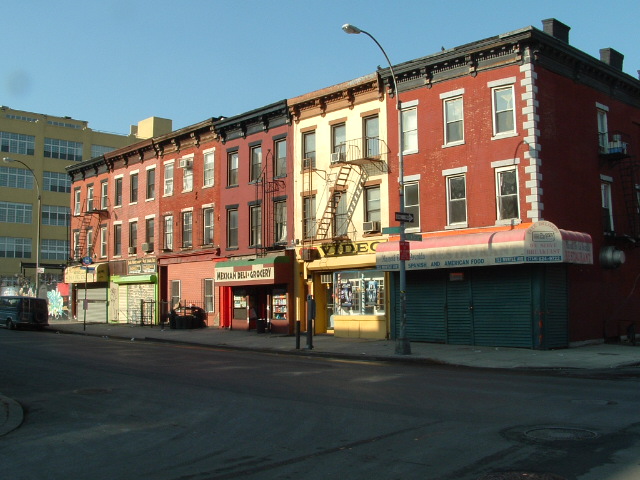
Walworth Street is a tiny place within Brooklyn, New York. It is only four blocks long, and today is noticeably more run-down than neighboring Williamsburg which is on the north side of Flushing Avenue, and other neighborhoods in Bedford-Stuyvesant. The land was owned by Daniel Ewen Nostrand, in whose memory Nostrand Avenue has been named after. In 1834, he surveyed the land and by 1850 there were wooden framed homes and small businesses located on both sides of Walworth, although the eastern side was regarded "low land" and sometimes would fill with water when heavy rainfall occurred, especially in areas south of Willoughby Avenue. By 1856 Nostrand added landfill, and the land was sold.
A typical home along Walworth was a two story wood building with a basement. Most of these houses were rental properties, and housed large numbers of people in each room. In the room that Irish John Smith lived, there were at least five others, including three adults. A typical house along this street probably was similar to the one advertised for sale in 1865:
FOR SALE. House and lot No. 14 Walworth Street, Brooklyn, for sale, house 20x38, lot 100 feet, has 9 rooms, good cellar, plenty of closets and drawers, good marble mantle, neat parlors, windows to the floor, praza front and rear, blinds to all windows, water and gas and fixtures in every room and basement. grained all through, and very convenient, near DeKalb Avenue...price very low, terms easy.
When Catherine Smith found her way to Walworth Street, it was regarded as "the country". Ten to twelve blocks east was an area called Clinton Hill (higher terrain - and named after an early New York state governor), and it was considered a weekend retreat for the well-to-do New Yorkers. Walworth Street, itself, was a combination of small "cottage homes" and light industry. While Germans, Italians and a few "coloured" families lived along these four blocks, it was mostly settled by new Irish immigrants. As with many of these Irish immigrants, they came to this country with little except the "clothes on their back" as this item from the Brooklyn Eagle indicated in 1849:
"In 1846, hundreds of poor unfortunates in our streets who fled from the famine stricken land to find food and a home in this happy country. Thousands landed...penniless, friendless and hungry. Many ended up in the Alms houses...sheltered and fed. This increased the cost of the county."
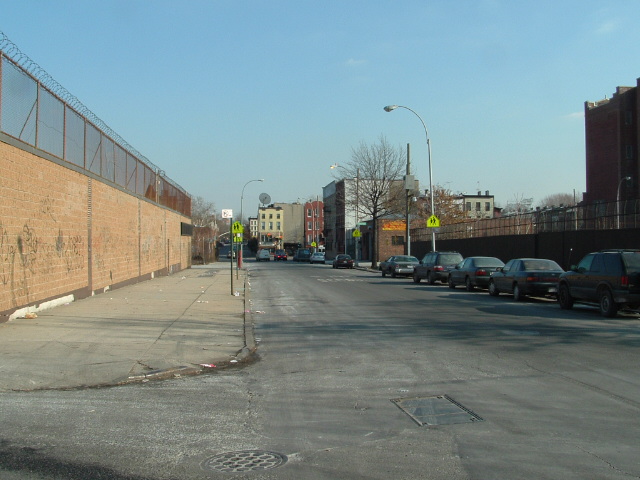
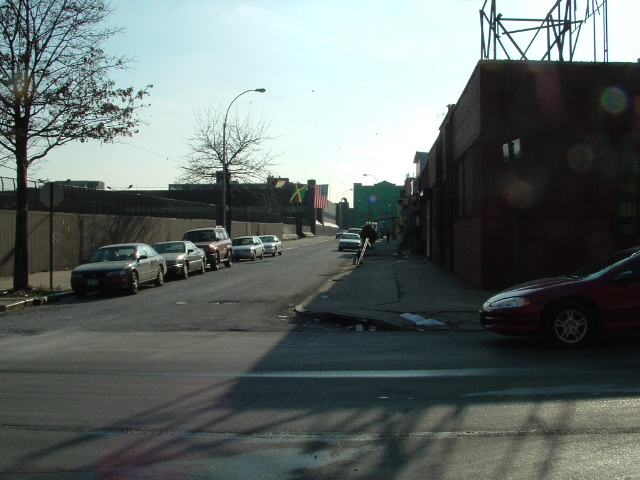
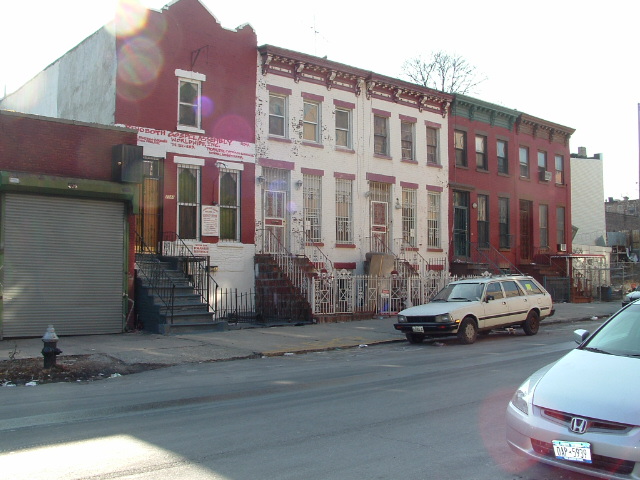
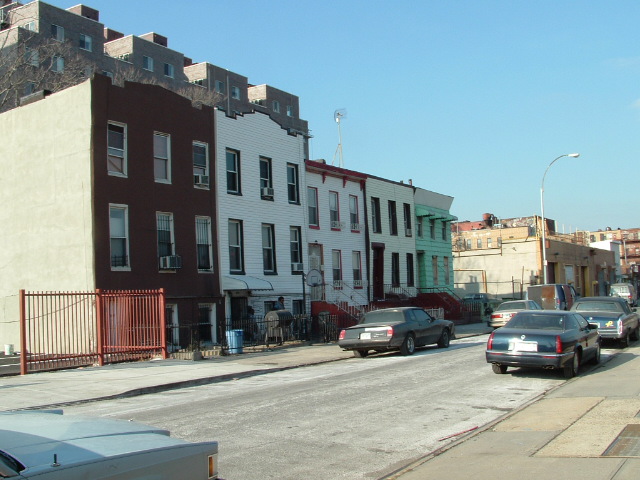
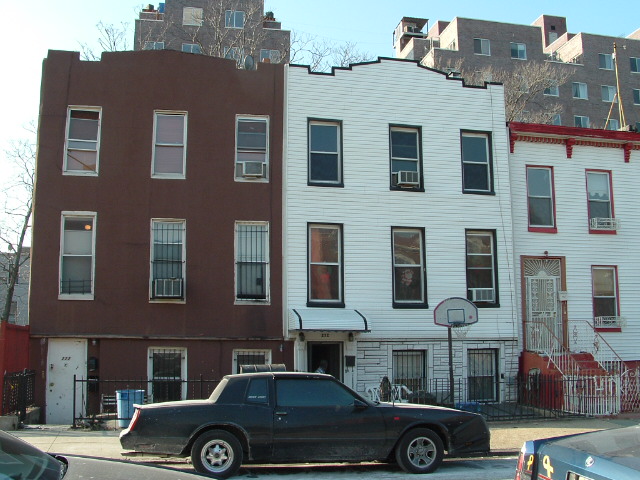
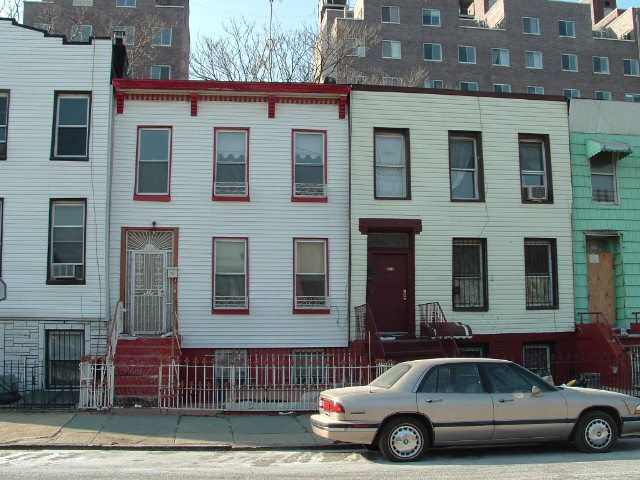
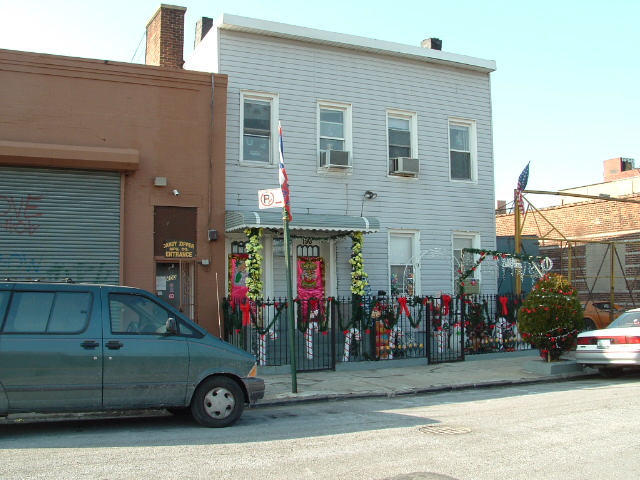
Elizabeth and I walked down these streets a few days before New Years, 2005, and it can be best described as a very blighted area (and probably was 150 years ago as well). As you walk towards Flushing Avenue, you get a good view of Mid-town New York City. It must have been the same way in 1850, and the tall buildings of Manhattan must have seemed somewhat magical to the poor families living along Walworth Street. This area was home to law abiding citizens and troublemakers, and the best way to tell this street's history is through the people, the tragedies and criminal activity that occurred during the time Irish John Smith walked its paved streets. While we will never know what our ancestors did, we can recreate some of the topics of conversation over this 10 year period.
Walworth Street (Between DeKalb and Willoughby Avenues)
1865 - To let: Walworth St. Fourth house from DeKalb, front basement, front room and bedroom on 2nd floor, to a man and wife without children.
Click to Enlarge
|
|
|
|||
|
|
|
|||
|
|
|
|||
|
|
|||||
Walworth Street (Between Willoughby and Myrtle Avenues)
1851 - Assessment for homeowners and businesses between Flushing and Myrtle on Walworth - Peter McAlvoy, Jane Graham, James Kelly, Michael McGuire, Peter Larkin, Bernard Lynch, James Burns, Henry Dusterkotter, James Dorley, Patrick McGiven, Bernard Sheridan, James Dorley, Joseph Bridges, Mary McGregor, John Ewan, Jane Elsworth, Joseph Bridges, John Lott, John Clark, Lewis Newton and Sidney Brown.
1853- D. Tienken, corner of Walworth and Myrtle - Grocery.
1854 - School house was constructed 112 feet south of Myrtle on Walworth St.
1856 - Archibald McMahan owned two vacant lots on west side of Walworth and between Myrtle and Willoughby Av. For Sale.
1856 - Fire in an unoccupied frame building in Walworth near Myrtle.
1857 - William Slutmore died, age 24. Member of the Columbia Engine Co. Resident of Walworth near Myrtle.
1859 - Terry (James R.) son John, 3 years old died..
1858 - Jeremiah Kavanaugh, saloon-keeper, was struck in the head with a brick by James Riley (19), a japanner by trade and lives on Walworth St...."He was choking me" said Riley. Kavanaugh was an ex-policeman.
1860 - Evening schools opened to the public at No. 8 Walworth Street, near Myrtle.
1860 - Wallabout Light Guard will meet Friday evening at Mr. Miles, Walworth Street near Myrtle to make preparations for the coming Target excursion.
1861 - James Stark defaulted on property located on Walworth and Willoughby.
1865 - Drafted. L Condon at 878 Walworth.
Click to Enlarge
|
|
|
|||
|
|
|
|||
|
|
|||||