Book of Ryans - The 20th Century
Chapter Fourteen
Farewell to old Ireland, the land of my birth,
I am safe in the only free country on earth,
Though my home I have lost, its no evil to me,
Its exchanged for the land they call sweet liberty.
J.H. Johnson
Song Publisher
No. 5 North Tenth Street
Three doors above Market, Philadelphia
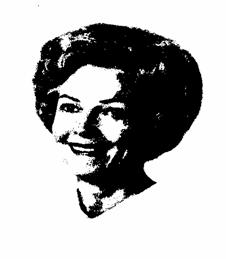
A thousand years after Riain walked the Leinster plains, his descendants had nearly populated every corner of the globe. The contributions of the Ryans are too numerous to list, however, the significance of their efforts should not be overlooked as they have involved themselves in important worldly affairs. Riain's progeny have become influential government leaders in both hemispheres such as Claude Ryan whom became Prime Minister of Canada; T.J. Ryan who became Prime Minister of Queensland, Australia; and although no Ryan has become President of the United States, a Ryan has lived in the White House for nearly two terms. Her name was Thelma Catharine Ryan, better known as Pat Nixon, wife of Richard Nixon, the 37th president of the United States. Mrs. Nixon's father named her Pat because she was born the day before St. Patrick's Day in a mining camp at Ely, Nevada. Her father's personal endearment was 'Babe', and when he was later asked why he gave her this name, he replied, "Well, she was there in the morning, my St. Patrick's Babe in the morning."[1]
|
|
Thelma Catharine Ryan She seldom went by this name, and formally adopted the name Pat while attending the local college. |
Ely was also her mother's birthplace. It was named after Ely Smith who made his fortune in Montana, but eventually lost it in South Dakota. Mining camps, such as Ely, were overwhelmingly male domains which drew undesirable and incorrigible men. Ely, like other mining camps that emerged in the frontier, contained dozens of shops which lined the town's Main Street, and the taverns and local pubs courted every local ruffian and gambler for miles around. Typical of the type of men these camps attracted was Tom Ryan, a rough-and-tumble miner who sought his fortune in one of these 'tent cities' :[2]
Tom Ryan, with knife in one hand and a stone in the other, terrorized a camp and chased the other bully out. Tom had things all his way until an enraged miner hurled a red-hot stove lit against his face. Tom's humiliation was too deep that he fled.
Pat's father William was born of Irish parents who immigrated from County Mayo, and before Thelma Catharine was born he had worked both as a sailor and miner. At the insistence of her mother Kate whom was German-born, the family moved to Artesia, California, to live on an eleven acre ranch. Her life on the farm during the depression years was filled with hard work, and when she was 13 years old her mother died of cancer. Thelma found herself caring for both the household and later her father who was dying of Silicosis, the miner's disease. Will Ryan was not a religious man, but before his death he returned to his Catholic roots. When asked what caused him to attend Catholic services again, he said, "It's all right to live without religion, but it's not all right to die without it."[3]
She attended the University of Southern California, graduating cum laude. Pat had both a teaching and an acting career behind her before she married Richard Nixon; and after Nixon entered politics she stood behind him for 28 years. As first lady, she was dubbed 'Plastic Pat' by the Washington elite whom couldn't understand why she preferred her role as a mother and housewife to a more visible role alongside her husband. Regardless of these hurtful comments, she proved quite capable in the political arena[4]:
She loved traveling and blossomed visibly in direct ratio to the distance between her mission and the inhibitions imposed on her at home. In 1970 she warmed the frost between the U.S. and Peru when she traveled to towns destroyed by earthquakes, delivering aid and personal comfort to survivors. In West Africa in 1972 she was cheered by huge throngs, exotic tribal kings and bare-breasted dancers. At home, in the protest years, she met with demonstrators in Los Angeles' Watts ghetto and heart out hostile students on campuses.
Mrs. Nixon had experienced many heartaches while her husband was in public office, but perhaps her greatest suffering occurred after the Watergate break-in. Watergate destroyed Richard Nixon's political career, and Pat felt the humiliation as painfully as her husband did. She never forgave the public for its viciousness, and she escaped the attention of the media by retiring to San Clemente and keeping to herself. When she died in 1993 from lung cancer, her contributions to the White House were still not forgotten: she refurnished the White House with period furniture and established the traditional Christmas candle-light tours. Bonnie Angelo summed up her political life best when she wrote, "Pat Nixon stood by her man in the best Tammy Wynette fashion."[5]
Other Ryans have distinguished themselves during the 20th century such as Clement Daniel Ryan (b. 1895), son of George and Nellie (O'Callahan) Ryan, who became President of the large department store chain, Montgomery Ward & Company. Another was Allen Ryan who became the Director of Bethlehem Steel, but resigned in 1920 to pursue other interests. Still another was Jack Ryan, an inventor of tremendous aptitude who created items as simplistic as children's toys to highly complex guided missiles. His obituary written by the Associated Press in 1991 details the extent of his contributions as an inventor:[6]
Jack Ryan; designed Barbie, missiles
LOS ANGELES - Jack Ryan, an inventor and designer whose creations ranged from the Barbie doll to air-to-air missiles, has died at age 65.
Ryan, a former husband of actress Zsa Zsa Gabor, died on Aug. 13 at his Bel-Air mansion, two years after suffering a debilitating stroke, a family spokesman said Sunday.
Ryan, who held more than 1000 patents, was a former vice president of research and design for Mattel Inc. and worked several years as an independent consultant and inventor for the toy company.
He designed many of the country's best-selling toys, including the Chatty Cathy talking doll, Hot Wheels and many electronic toys. The model-perfect Barbie was his best-known toy.
He designed the Sparrow and Hawk missiles when he worked for Raytheon in Los Angeles.
As the latter half of the nineteenth century evolved, the Irish made significant headway into the economic mainstream of American business. Many of these new entrepreneurs traced their birth to Ireland, and most came into their wealth like the characters out of a Horatio Alger book. The Irish believed that America and Canada offered prosperity and wealth to anyone who was willing to work hard, and this philosophy was extended to Ireland as a means to improve their economic lot. A Kilkenny-born Connecticut woolen manufacturer by the name of John Ryan has often been quoted by American Irish in an attempt to urge Ireland's poor to make their lives better. His message was plain:
"Look to the Yankee as a model for self-improvement and economic progress."[7]
The stories of potential wealth influenced many of the broadsides of the era, and these songs laughingly described how easy it was to obtain work as this one demonstrates[8]:
I will tell a story that was told to me,
A good old story, Agra Machree,
When my mother was a dying, alas, says she,
Nothing's too good for the Irish."
When we came here, me brother Dan,
I says to him, "We'll do the best we can,
So they made him "copper" and me an Alderman,
Nothing's too good for the Irish.
Other broadsides were more realistic and described how being Irish restricted their employment opportunities. As the famine immigrants left their boats, they encountered substantial discrimination because the Irish were viewed as unskilled, uneducated, and ignorant. Anti-Irish attitudes coupled with being Catholic did not help the Irish assimilate into the American culture easily as North America was predominantly a Protestant nation. The average American saw the famine Irish, whom were arriving in large numbers, willing to work for poverty wages. This angered thousands of laborers because it affected pay and job opportunities for men already living in the American communities. Small businesses sympathised with the working class, and consequently many refused to hire Irishmen as this broadside written by John F. Poole lamented:[9]
I'm a dacint boy, just landed from the town of Ballyfad;
I want a situation: yis, I want it might bad.
I saw a place advertised. It's the thing for me, says I;
But the dirty spalpeen ended with: No Irish need apply.
After the Civil War much of the ill feelings towards the Irish abated. A renewed industrial spirit revived the war-torn economy, and the North's manufacturing enterprises experienced tremendous growth which created employment opportunities for all including the Irish. The Civil War's conclusion also brought great prosperity for traveling merchants in the South. A variety of traveling salesmen roamed throughout the South selling everything from dry goods to medicines, and several historians observed that these salesmen were solely of Jewish extraction. In reality, many of these traveling salesmen were Irishmen who claimed they were Jewish because they disliked salt pork. It was commonly known among traveling salesmen that by declaring their "jewishness" they would be offered other food besides the unpopular ham.
Forty years after the great famine, a new generation of Irish -the American-born Irish- knew very little of their heritage. As a general rule, the sons and daughters of immigrants had very little desire to inquire about their parent's ancestry in Ireland because it was not relevant anymore, particularly as they saw many of their "Irish" friends becoming successful citizens in their adopted homes. New opportunities in the West, especially the gold and silver fields of Colorado and the oil fields of Pennsylvania, attracted many Irish men whom coveted the wealth that America could provide. One of the more successful Ryans to make his mark in the American west was John Denis Ryan who began as an oil salesman in Pennsylvania, moved to Montana to become a banker, and in 1906 was elected President of the Anaconda Copper Mining Company. President Woodrow Wilson appointed him to serve on the aircraft board as its chairman during World War I, and later he became the assistant secretary of war. John D. Ryan was also active in Butte's Land League, and his observation concerning England's passage of the Land Act convinced him that England was not sincere about allocating lands to Catholics.
It was a time when many were making their fortunes, and one of the most successful entrepreneurs in the late 19th century was a man of Irish descent: Thomas Fortune Ryan. He was born in Lovingston, Nelson County, Virginia, in 1851 of Irish ancestry. The progenitor of the Virginia Ryans was Philip Ryan whom settled in Lynchburg after his marriage to Captain Whitehead's daughter. Stephen Birmingham speculated that Thomas Fortune Ryan's ancestor was another Philip Ryan who was among the original settlers in Virginia, however other writers were unconvinced and believed his family arrived in America after the Revolutionary War[10]
The first American Ryan, Philip, went from Ireland to England during the reign of James II and then, after some unrecorded difficulties with the Crown, made his way to the colonies, where he first appeared in Virginia around 1690.
His father had been described as either a farmer or tailor (no one is really certain), and accounts as to when the family made Lovingston their home can not be substantiated. At the age of 5 he became an orphan, and he was entrusted to the care of his grandmother. These were hard years for young Ryan and they became especially difficult after the Civil War devastated his family's Nelson County farm. After seeing several years of poor crop production he left Lovingston at the age of 17 with only $17 and a railroad ticket in his pocket. He left for Baltimore where he found work with John S. Barry, a dry-goods commission merchant. Barry was impressed with the young Ryan, and he showed him how to run a successful business. While under his employ, he fell in love with his daughter Ida, and after borrowing money from Barry, moved to New York City where he obtained a job as a clerk in a brokerage house. In time, he brought a seat on the New York Stock Exchange where he became acquainted with William C. Whitney, of the Peter A. B. Widener and William Collins Whitney brokerage firm. Whitney was so fascinated with Ryan that he offered him a partnership in his firm, and this relationship allowed Ryan to prosper both financially and politically. Whitney's impression of Ryan was also shared by others on Wall Street where he was described as a "tall, lanky man with abundant charm"[11]
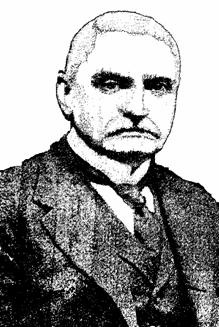 Thomas Fortune Ryan
While Whitney and Widener became rich through their later investments, it was Ryan who grew particularly wealthy. He bought stocks in railroads, coal mines, New York City's rapid-transit operations and street lighting, and many other business ventures. At one time he held a controlling interest in the Equitable Life Assurance Society; but later he lost his commanding bid (and eventually sold his shares) to J. P. Morgan. He along with a group of investors subsequently obtained control of the National Cigarette Company, and merged it with the Union Tobacco Company. Thomas Fortune Ryan's new alliance also battled James Duke over dominance of the last remaining major tobacco company in America. His real influence was truly recognized when King Leopold of Belgium requested Ryan's assistance to reorganize the diamond mines in the Congo.
Thomas Fortune Ryan had become well known on Wall Street, but it was his rescue of the Equitable Life Company, a $400,000 company, from financial disaster that brought him to the attention of the general public. The Equitable was destined for receivership because of internal conflicts among its board of directors. The possibility of bankruptcy would have seriously hurt Wall Street and the investment houses, so Ryan purchased the majority of its stock for $ 2,500,000. As part of his plan, he began transferring the stock to several trustees who guided the company back to financial stability. Among the trustees which were entrusted this responsibility was Grover Cleveland, the former United States President.
He was also actively involved in other pursuits such as railroads. One of his accomplishments was reorganizing the Richmond & Danville railroad into the Southern Railway. He also was actively involved in the financial affairs of the Central of Georgia Railroad and the Seaboard Air Line Railway as well.
Thomas Fortune Ryan had been described by Bernard Baruch as "the most adroit, suave and noiseless man that American finance has ever known"[12], and he predicted that Ryan would become one the richest men in the United States. Bernard Baruch commented that along with his imposing presence, he had "the softest, slowest, gentlest Southern voice you ever hear. When he wanted to be particularly impressive, he would whisper. But he was lightening in action and the most resourceful man I ever knew intimately in Wall Street."[13] Ryan was an impressive figure physically, and a contemporary writer, awed by his presence, described his cultured features in elaborate terms:
"handsome, tall, straight, broad shouldered, deep chested, with a large head, high brow, big smiling eyes, powerful nose, a firm mouth shaded by a curlling mustache of iron gray, wide, well curved jaws and a formidable chin, cleft at the centre."[14]
Others described him in less glowing terms. His enemies called him a ruthless pirate who had a heart of stone. Ryan's opponents criticized his political influence at Tammany hall, and they pointed to the election of George McClellan as New York City's mayor whom they claimed would not have been elected if it were not for Ryan's personal influence. He also influenced other elections, and one in particular was well publicized where he gave the largest political contribution (a sum of $450,000) in American history to finance the election of Judge Alton Parker. He was also a delegate to the Democratic National Convention in 1904 and 1908, and made important friends during his life including President Cleveland and King Leopold of Belgium.
Ryan's detractors were pleased in 1905 when a grand jury investigated the disarray within one of his enterprises, the Metropolitan Street Railway Company. The grand jury concluded that although its assets were sold after it entered into receivership, actual criminal intent could not be proved even though things were done which could be construed as either "dishonest and probably criminal".[15] The grand jury's conclusions noted that Ryan's actions may have been marginally criminal and "found many things deserving severe condemnation, after prolonged and careful investigation it has been unable to obtain any evidence showing . . . a crime."[16] Ryan never fully confessed about his participation in the railway's financial ruin, nevertheless, he did hire a public relations agent to help clear his name. Eventually, this scandal passed from memory, and Ryan quietly pursued his financial investments in mining, typewriters, and public utilities. At the time of his death in 1928, his fortune was estimated at over $200,000,000 and although many fortunes since then have exceeded this value, this was a considerable sum in its day.
Other Ryans also became successful in America, and several formed companies which are still recognizable today. United Parcel Service, or UPS, which operates a package delivery company throughout Canada, United States, Europe, and the Far East was created in 1907 by two teen-agers, James Casey and Claud Ryan, who borrowed $100 and started a messenger service in Seattle, Washington. They diversified and began delivering packages, and in 1919 their company was renamed to UPS. Thomas F. Ryan, a Canadian businessmen born in 1872, introduced 10-pin bowling to Canada. Canadian businessmen were attracted to the game, but complained of the heaviness of the pins. He assessed their complaints and created a game called duckpin using 5 light-weight pins. He later added a rubber collar around the mid-exterior of the pin which is still used today. Another recognized company, and a pioneer in its field, was Ryan Aeronautical. Ryan Aeronautical played an important role in the development of early 19th century air flight.
Man had always dreamed of flying with the birds. Great inventors and philosophers prophesied that man would develop a machine able to lift a human into the heavens. Leonardo da Vinci, in designing a helicopter-like device, believed in man's ability to fly, but he never actively pursued its development. When man manufactured gasses that were lighter than air, balloons became an option for air flight. In time these balloons supported passenger travel through the development of the blimp and zeppelin. Subsequently history recorded many attempts to develop flying machines, yet many felt that man should not create unnatural transportation methods. It was not unusual to hear the words, "If God wanted man to fly he would have given him wings."
Air transportation was brought to reality in 1903 at Kitty Hawk, North Carolina. On a near-by field, Orville and Wilbur Wright developed and flew the first powered airplane which traveled between 120 and 582 feet. Within 25 years, the airplane manufacturers made many enhancements which allowed them to fly longer distances. In May 1926 Lt. Commander Richard E. Byrd made the first flight over the North Pole in an airplane powered by a Wright Whirlwind engine. The following year the same engine was placed in the Ryan monoplane, the "Spirit of St. Louis" which allowed Charles Lindberg to fly non-stop 3735 miles from Roosevelt field, Long Island, to LeBourget Airdrome, Paris, in 33 hours 39 minutes.
The inventor and builder of the `Spirit of St. Louis' was Claude Ryan along with his company Ryan Aeronautical. Ryan Aeronautical was the first company to produce monoplanes in large commercial quantities, and later his company was the first to offer commercial air service between San Diego, California, and Los Angeles, California. During World War II his flying school trained over 14,000 pilots for the Army Air Corps. As other air companies headed by men like Sam Boeing, Donald Douglas, and the Lockheed brothers developed larger airplanes; Ryan Aeronautical continued to focus on developing small airplanes. After the Korean War, Ryan's company began building engine components for the major airplane manufacturers. The "National Review" wrote that:
"He kept coming up with drastic new ideas, the most exotic of which was a jet aircraft that was capable of vertical take-off and landings. It actually flew. But no one seemed to need such a brilliant machine."[17]
Ryan was an unassuming man who was described as a "gentle smiling man, not a self-promoter."[18] He was responsible for significantly enhancing air travel, yet he did not promote his inventions to enhance his wealth or financial status. It was the innovative features that Ryan developed which allowed his company to survive the early years of airplane development. These early years were lean and only a handful of men, such as Glen Curtiss at Garden City, Glenn Martin in Cleveland, William Boeing in Seattle, Donald Douglas in Santa Monica, and William Stout in Detroit, survived the fierce competition of the Airline industry. Claude Ryan had seen many changes in air flight of his life by the time he died in 1982 at the age of 84.
Other prominent inventors evolved among those with the Ryan surname, including Walter D'Arcy Ryan who made artificial lighting both a science and an art. He was born in Kentville, Nova Scotia in 1870, and later moved to Schenectady, New York, to work with the General Electric Company. He was considered the pioneer in illuminating techniques, and created the first illuminating laboratory for General Electric at Lynn, Mass. His most memorable feat was his lighting creations at the Century of Progress exposition at the Chicago's Worlds Fair. His talents were immediately praised by everyone who viewed his new illuminating methods:
His characteristic energy, originality, artistry and engineering came into play immediately, and he put into effect an illumination spectacle which made the big fair as much as a success at night as it was in the daytime. All previous attempts at illumination were dwarfed by the effects at Chicago.[19]
His illumination legacy is still with us today. The concept of directing spotlights on buildings and monuments developed under his imaginative supervision.
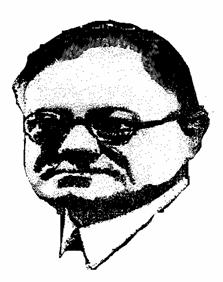
William D'Arcy Ryan